
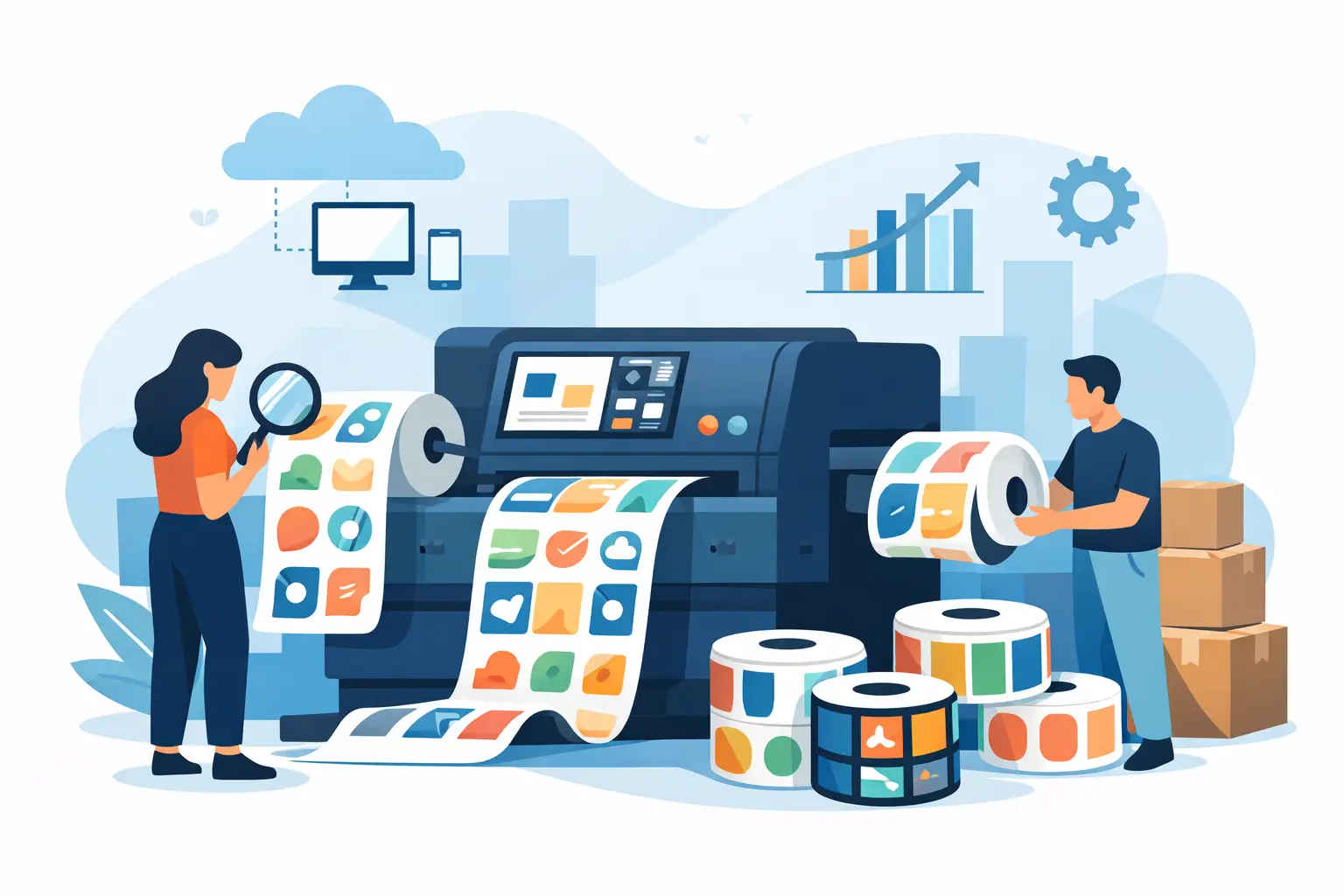
When a product launch is waiting on packaging, label delays become business delays. That is why digital label printing services have become a practical choice for brands that need speed, quality, and production flexibility without sacrificing consistency.
For many manufacturers and packaging buyers, the real question is not whether digital printing works. It does. The better question is when digital is the right fit, what it does best, and how to choose a print partner that can deliver repeatable results under real production conditions.
What digital label printing services are designed to solve
Traditional print methods still have an important place in label manufacturing, especially for very large runs. But many buyers are not ordering one static design in massive quantities anymore. They are managing multiple SKUs, seasonal promotions, versioned packaging, test-market launches, regulatory updates, and shorter replenishment cycles.
Digital label printing services are built for that environment. They reduce setup time, support shorter runs more efficiently, and make it easier to produce multiple versions of the same label without the cost structure that usually comes with conventional plates. For brands that need to stay responsive, that matters.
This is especially useful in categories where packaging changes often. Food and beverage brands may need limited-time flavors or private label versions. Health and beauty companies may update artwork or ingredients. Pharmaceutical and industrial products may require precise data, warnings, or format changes that cannot wait for long production windows.
Where digital printing makes the most sense
Digital printing is often the best fit when order sizes are moderate, turnaround matters, or artwork changes are frequent. It is also a strong option when visual quality needs to stay high across several versions of the same product line.
A brewery releasing seasonal cans, a skincare brand managing several scent variations, or a food manufacturer testing a new regional product can all benefit from digital production. The same goes for companies that need fast replenishment after a successful launch and do not want to overcommit to large inventories of labels that may change.
That said, there is always a trade-off. If a buyer is running a very high-volume, long-term SKU with no expected artwork changes, conventional methods may offer a lower unit cost at scale. A dependable manufacturer should say that clearly. Good printing decisions come from matching the process to the job, not forcing every project into one production method.
Why print quality still separates one supplier from another
Digital printing is not a commodity service just because the process is widely available. Equipment quality, operator experience, color management, substrate knowledge, and finishing control all affect the final label.
A label has to do more than look sharp on a proof. It has to hold color consistency across reruns, apply cleanly on the production line, and perform in its actual environment. A water bottle label faces moisture and cold storage. A cosmetic label has to support shelf appeal and fine detail. A pharmaceutical label may require legibility, tight registration, and dependable serialization support. An industrial label may need stronger durability and adhesive performance under challenging conditions.
That is where an experienced production partner adds value. The press matters, but so does the team running it and the process around it. Advanced equipment such as the HP Indigo 6900 Digital Press allows for excellent image quality and efficient short-run production, but technology alone does not solve specification issues, material mismatches, or finishing problems.
Digital label printing services and faster turnaround
Speed is one of the strongest reasons buyers move to digital. Without plate-making and with reduced setup requirements, production can move faster from approved art to finished labels. That can help brands hit launch dates, respond to demand shifts, or replace inventory without extended lead times.
But fast turnaround should not mean rushed execution. In label manufacturing, speed only has value if the job arrives correct, consistent, and ready for use. A late label is a problem. A fast label that fails on press or in the field is a more expensive problem.
That is why buyers should look beyond turnaround claims and ask how a supplier manages proofing, color expectations, material recommendations, and finishing requirements. Reliable speed comes from operational control, not just press capacity.
How digital supports SKU variety without excess inventory
One of the biggest advantages of digital label printing services is the ability to print what you need, when you need it. That changes the inventory equation for many businesses.
Instead of ordering large volumes of every version to justify setup costs, brands can produce shorter runs aligned with actual demand. This can reduce waste tied to packaging changes, discontinued items, or forecast errors. For companies managing multiple products, frequent promotions, or changing compliance language, that flexibility can improve both cash flow and warehouse efficiency.
There is still planning involved. Shorter runs can be cost-effective, but only if artwork, specifications, and reorder timing are managed well. The strongest print partners help customers think through those details before they become avoidable production issues.
Industry-specific needs matter more than many buyers expect
Not every label job is simply a matter of size, shape, and graphics. Different industries bring different technical demands, and that affects how digital work should be planned.
Food labels often require strong color, clean ingredient text, and materials suited for refrigeration, freezing, or moisture exposure. Beverage labels may need premium appearance and dependable adhesion on glass, aluminum, or plastic containers. Beauty labels usually demand shelf presence along with precise detail reproduction. Pharmaceutical labels place a higher burden on clarity, consistency, and compliance-related execution. Industrial applications may require durability, chemical resistance, or aggressive adhesives.
A supplier serving multiple industries should be able to guide these decisions instead of waiting for the customer to define every technical detail. That consultative support is often the difference between a label that looks good in a file and one that performs correctly in production and distribution.
What to ask when evaluating digital label printing services
A purchasing decision should not stop at price per thousand. Buyers should also look at whether the manufacturer understands the application, material requirements, and production goals behind the order.
Ask how the supplier handles repeat color consistency, what press technology they use, how they approach short runs versus longer runs, and whether they regularly support your product category. Ask about turnaround expectations, proofing, finishing options, and how reorders are managed. If the labels are going onto high-speed lines or into regulated environments, those details should be part of the conversation early.
It is also worth asking how the company responds when specifications change. Packaging projects rarely stay static for long. A responsive print partner should be able to adapt without turning every revision into a production setback.
Why the right manufacturing partner matters
Digital capability is only part of the equation. Brands still need a supplier with production discipline, practical experience, and the capacity to support growth over time.
That means understanding both the visual and technical side of labeling. It means being able to quote accurately, recommend the right construction, and deliver repeat orders with the same level of quality. It also means being available when timelines tighten or product requirements shift.
For buyers across food, beverage, beauty, pharmaceuticals, produce, and industrial markets, a label manufacturer should function as more than a vendor. The right partner helps reduce risk. That comes from experience, equipment, and a production process built around execution.
Miles Label Company operates with that mindset. For businesses that need custom labels backed by modern digital print capability and long-standing manufacturing knowledge, the goal is straightforward – produce labels that look right, run right, and arrive on time.
If you are evaluating digital label printing services, the best next step is to look at your actual packaging needs, not just your current order size. Product variation, lead times, compliance requirements, and inventory strategy all shape the right print approach. When those pieces are aligned, label production gets easier to manage and a lot more dependable.