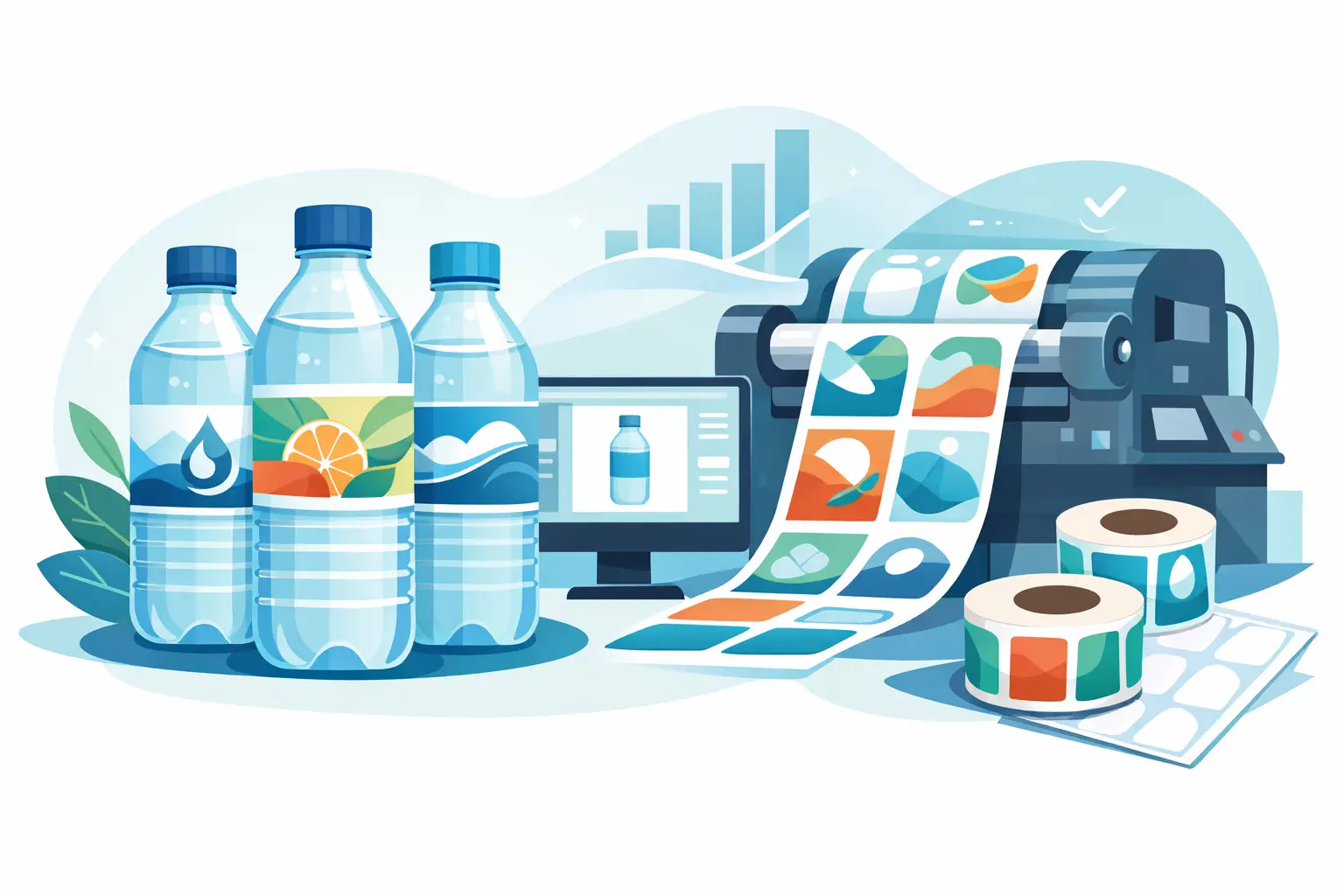
A water bottle label has a short window to do its job. It needs to look sharp on the shelf, stay in place through filling and refrigeration, and hold up when the bottle ends up in a cooler, gym bag, or case shipment. That is why custom water bottle label printing is not just a design decision. It is a production decision that affects brand presentation, operational efficiency, and product performance.
For business buyers, the real question is not whether a label can be printed. It is whether it can be printed consistently, on the right material, with the right adhesive, color accuracy, and turnaround time to support production schedules. Water bottle labels may appear simple, but they involve a specific set of packaging requirements that need to be handled correctly from the start.
What matters in custom water bottle label printing
Water bottles are exposed to more handling and moisture than many other packaged products. Labels may be applied to PET bottles, clear containers, or other packaging formats, and they often need to perform in refrigerated environments or during transport where condensation is common. A label that looks good at proof stage can still fail in production if the material or adhesive is not matched to the actual use case.
Print quality is equally important. Beverage brands rely on strong shelf presence, clear logo reproduction, readable ingredient or source information, and consistent color across runs. If one batch prints darker than the next, or fine text loses clarity, that inconsistency shows up immediately in market. For established brands, that creates avoidable quality issues. For emerging brands, it can undercut credibility.
Custom water bottle labels also need to fit the realities of the production line. Label roll orientation, core size, application speed, and finished dimensions all matter. If those details are overlooked, even a well-printed label can create downtime or waste during application.
Choosing the right label material for water bottles
Material selection is one of the first decisions that affects long-term performance. In water bottle applications, the choice often comes down to the look the brand wants and the conditions the label will face.
Film materials are a common fit for bottled water because they offer good moisture resistance and durability. They tend to perform well in chilled environments and can maintain appearance even when bottles are handled repeatedly. For products that need a clean, premium presentation, film can also support smooth finishes and strong print definition.
Paper labels may work in some applications, especially for short-term promotions or products with limited exposure to moisture. But they are generally less forgiving in refrigerated or wet conditions. If the bottle is likely to sweat, sit in ice, or move through cold distribution channels, paper may not hold up as well over time.
Clear labels can create a no-label look that many beverage brands prefer. That effect can be highly effective, but it also raises the standard for print registration, adhesive choice, and application consistency. Clear materials tend to show flaws more easily, so production control matters.
Adhesive performance is not a small detail
In water bottle label printing, adhesive selection deserves as much attention as artwork. Bottles are often labeled in environments where temperature, moisture, and speed all affect adhesion. A label must bond securely to the container surface and stay there through shipping, storage, and consumer use.
A standard adhesive may be enough for some room-temperature applications, but refrigerated or condensation-heavy products often need more specialized performance. Bottle surface characteristics also matter. Some plastics accept labels more easily than others, and curved or contoured bottles can put extra stress on the label during application.
This is where a consultative print partner adds value. Rather than treating every bottle label the same, an experienced manufacturer looks at the actual container, storage conditions, and application process before recommending a material and adhesive combination.
Print quality and brand consistency
Beverage buyers are usually balancing two pressures at once. They need labels that support the brand visually, and they need a production process that remains cost-effective. Those goals are not in conflict, but they do require the right print capability.
Digital technology has made custom label production more flexible, especially for brands managing multiple SKUs, seasonal variations, or shorter runs. It allows for excellent image quality, tighter color control, and faster setup compared with more traditional methods in many applications. That is especially useful when a brand needs to test a new product line, respond to changing demand, or produce several label versions without unnecessary delays.
At the same time, not every project should be approached the same way. Some orders are driven by speed. Others are driven by color precision, versioning, or reorder consistency. A capable print manufacturer will help define the best path based on artwork, quantities, substrate, and delivery timeline.
How custom water bottle label printing supports operations
For procurement teams and operations managers, label buying is not only about appearance. It is about keeping production moving. If labels arrive late, are wound incorrectly, or fail during application, the costs show up quickly.
A reliable supplier should be able to confirm the production specs that affect line performance, including roll configuration, label size, spacing, and application requirements. This is particularly important for co-packers and beverage manufacturers running automated labeling equipment. Small mismatches can slow throughput, create misapplied labels, or increase scrap.
Fast turnaround also matters, but speed alone is not the measure of a good partner. The better question is whether the printer can deliver on schedule without sacrificing consistency. When timelines are tight, buyers need accurate quoting, clear communication, and realistic lead times. That kind of responsiveness helps production teams plan with confidence.
When short runs make sense
Not every bottled water label order needs to be a massive production run. Many brands need flexibility. They may be launching in a regional market, producing private label products, testing promotional packaging, or managing multiple customer-specific versions.
In those cases, short to mid-size runs can be the right move. They reduce inventory risk and make it easier to update packaging without sitting on outdated stock. Digital printing is especially useful here because it supports high-quality output with less setup time, which can improve both speed and cost efficiency for qualifying jobs.
There is a trade-off, of course. High-volume repeat programs may benefit from a different production strategy depending on specs and order patterns. That is why project planning matters. Buyers get better results when the printer understands not just the label itself, but the business context behind the order.
Compliance and content accuracy still matter
Even straightforward water bottle packaging can carry regulatory and retail requirements. Brand marks, product identity, source information, barcodes, lot coding compatibility, and other mandatory or operational elements all need to reproduce clearly and consistently.
If a label includes small text or machine-readable codes, print resolution becomes especially important. A visually attractive label that causes scanning issues or readability problems creates trouble further down the supply chain. For companies selling across multiple channels, consistency is not optional.
This is another reason to work with an experienced label manufacturer. Good production support helps catch technical issues before they become expensive packaging problems.
What to look for in a printing partner
If you are sourcing custom water bottle label printing, it helps to evaluate more than price per roll. A lower unit cost does not mean much if the labels fail in use or create delays on press. Buyers are usually better served by looking at the full picture: material recommendations, print quality, turnaround reliability, and production support.
An established manufacturer should be able to discuss your bottle type, environment, quantity, artwork needs, and application method in practical terms. They should also be prepared to recommend options based on performance, not guesswork. For many brands, that is the difference between simply buying labels and building a repeatable packaging process.
Miles Label Company approaches these projects with that production mindset. With deep category experience and modern digital capability, the goal is straightforward: deliver labels that look right, run right, and arrive when they are needed.
The best water bottle label is not the one that only looks good in a sample pack. It is the one that performs from print run to application to final use, without creating extra work for your team.