
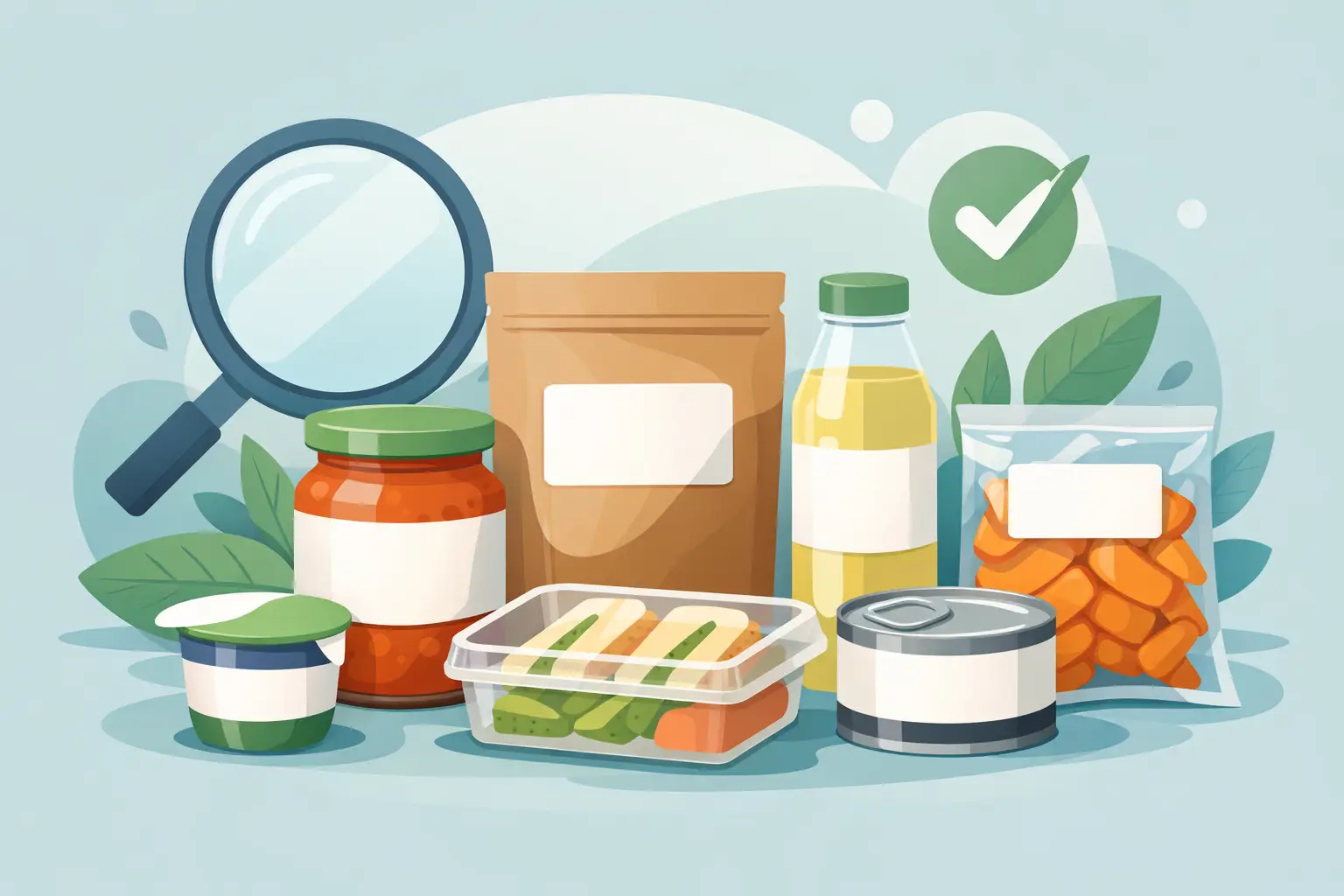
A label can look perfect on press and still fail the moment it hits a cold jar, oily pouch, or frozen tray. That is why choosing the best labels for food packaging is less about picking a nice material and more about matching the label to the product, packaging surface, storage conditions, and production environment.
For food manufacturers, brand owners, and packaging buyers, the right label has to do several jobs at once. It needs to hold up through filling, shipping, shelving, and handling. It needs to present the brand clearly. In many cases, it also needs to support ingredient, nutrition, barcode, lot code, and other required information without readability issues. If any part of that chain breaks down, the label becomes a cost problem, an operations problem, and sometimes a compliance problem.
What makes the best labels for food packaging
The best label is the one built for the actual use case. That sounds simple, but food packaging rarely gives you just one condition to solve for. A product may be applied in a warm production room, moved into cold storage, shipped through humidity, and handled by consumers with wet or greasy hands. A label that performs well in one of those environments may struggle in another.
Material selection matters, but so do adhesive, finish, print method, and application method. A label for a dry snack carton has different requirements than a label for refrigerated salsa, a freezer meal, or a condiment bottle exposed to oil and repeated handling. When buyers evaluate label options, they should look at the complete packaging process rather than just the appearance of the finished roll.
Start with the packaging format
The container often determines the most practical label construction. Glass jars, rigid plastic tubs, flexible pouches, paperboard cartons, metal cans, and clamshell produce packaging all behave differently on the line and in storage.
Rigid containers
Bottles, jars, tubs, and clamshells usually offer stable surfaces, which gives more flexibility in label choice. That said, curved surfaces and condensation can create problems quickly. A pressure-sensitive label is often the best fit for rigid food packaging because it gives strong visual presentation, works well with automated application, and supports a wide range of shapes, finishes, and variable data needs.
For refrigerated items, adhesive performance becomes a priority. If the container will sweat or the label will be applied in a cold environment, a standard adhesive may not be enough. In these cases, selecting a label engineered for cold-temp application or moisture exposure is more important than choosing a premium-looking face stock.
Flexible packaging
Pouches and film packages require more caution. Flexible packaging bends, compresses, and changes shape during filling and shipping. The label stock has to move with the package without flagging, tunneling, or lifting at the edges. Thinner films are often a better choice than stiffer paper materials in these applications.
This is where testing matters. A label that applies cleanly to a flat sample can behave differently once the pouch is full and under tension. For high-volume runs, buyers should evaluate application conditions early rather than after artwork approval.
Paperboard cartons and boxes
Dry foods sold in cartons often allow for more straightforward label construction. Paper labels can work very well here, especially when moisture and abrasion are limited. The benefit is cost efficiency and strong print appearance. The trade-off is durability. If the package may be exposed to freezer conditions, condensation, or rough transport, a film label may still be the better long-term option.
Paper vs. film labels for food products
One of the most common questions in food packaging is whether paper or film is the better choice. The answer depends on the product environment.
Paper labels are often a strong option for dry goods, shelf-stable foods, and packaging that stays in controlled conditions. They can deliver excellent print quality and help manage cost. They also work well when brands want a more natural or traditional shelf appearance.
Film labels, including polypropylene and similar constructions, are typically the better fit for moisture, refrigeration, freezer storage, and heavy handling. They resist tearing better than paper and generally maintain appearance longer in demanding conditions. For many food brands, especially in sauces, prepared foods, dairy-adjacent products, beverages, and refrigerated items, film labels provide a more dependable result.
There is a cost difference, and that matters. But replacing failed labels, dealing with line stoppages, or shipping product with poor presentation usually costs more than choosing the right material up front.
Adhesive matters as much as the face stock
A high-quality printed label still fails if the adhesive is wrong. In food packaging, adhesive performance needs to match both the package surface and the temperature conditions during application and storage.
Some products are labeled at room temperature and then moved into refrigeration or freezer storage. Others are labeled in already chilled environments. Those are not the same situation, and they should not be treated the same way in the quoting process. Surface energy also matters. Smooth plastic, textured paperboard, glass, and corrugate each interact differently with adhesive systems.
Permanent adhesive is the standard choice for most primary food packaging, but even within that category there are meaningful differences. Buyers should also account for exposure to moisture, oil, and repeated touch. A label on a spice jar lives a different life than a label on a frozen entree tray.
Print quality and readability are part of performance
Food labels do more than carry a logo. They often need to present ingredients, nutrition facts, allergen statements, UPCs, and batch or traceability information in a limited space. That means print resolution and consistency are not cosmetic issues. They are operational requirements.
High-quality digital printing is especially useful when a brand needs strong color reproduction, shorter runs, SKU variations, and faster turnaround without sacrificing consistency. For product lines with multiple flavors or seasonal changes, this can reduce waste and improve speed to market.
This is one reason many manufacturers value modern digital press capability. Equipment such as the HP Indigo 6900 Digital Press supports sharp graphics, clean small text, and reliable color output across repeat orders. For food packaging, that consistency helps protect both shelf presence and production planning.
Best labels for food packaging by product environment
If the product is dry and shelf-stable, paper labels may be the most cost-effective solution, especially on cartons, jars, or containers stored in controlled environments. If the package will face refrigeration, condensation, or freezer storage, film labels with the proper adhesive are usually the safer choice.
If the product contains oils, sauces, or frequent consumer handling, durability becomes more important. In those cases, a more resistant material and finish can help preserve legibility and appearance. For premium retail presentation, surface finish also matters. Matte and gloss can both work well, but they create different brand impressions and may affect how colors and text read under store lighting.
There is no single best label for every food product. There is only the best label for that product, that package, and that supply chain.
Compliance and production planning should happen early
Food packaging teams sometimes separate artwork, compliance, and label construction into different conversations. That can create delays. Label size, material, adhesive, and print method all affect how much information fits and how well it remains readable after application.
If a package has limited panel space, the label may need to balance branding and required content carefully. If variable information will be added later, the label construction has to support that process cleanly. If the line runs fast, application tolerances become part of the decision. These are not details to sort out after the quote is approved.
The most efficient projects start with a practical review of container type, storage conditions, application method, artwork demands, and run volume. That shortens revisions and helps avoid performance issues later.
What buyers should ask before ordering
Before moving into production, buyers should confirm how and where labels will be applied, what temperatures the product and container will be at application, whether the package will face moisture or oil, how much abrasion the label may see, and whether the design includes fine text or multiple SKUs. Those answers usually point to the right construction faster than a general request for a food-safe label.
An experienced label partner should be able to walk through those variables and recommend a practical path, not just quote a standard material. That is especially important when timelines are tight or when a brand is scaling from pilot runs to repeat production.
Miles Label Company works with food manufacturers and packaging buyers who need labels that perform in real production conditions, not just in mockups. The goal is simple: deliver a label that applies cleanly, looks right, and holds up where the product actually lives.
When you are choosing food packaging labels, the smartest decision is usually the one that solves the production problem first and lets the branding do its job without interruption.