
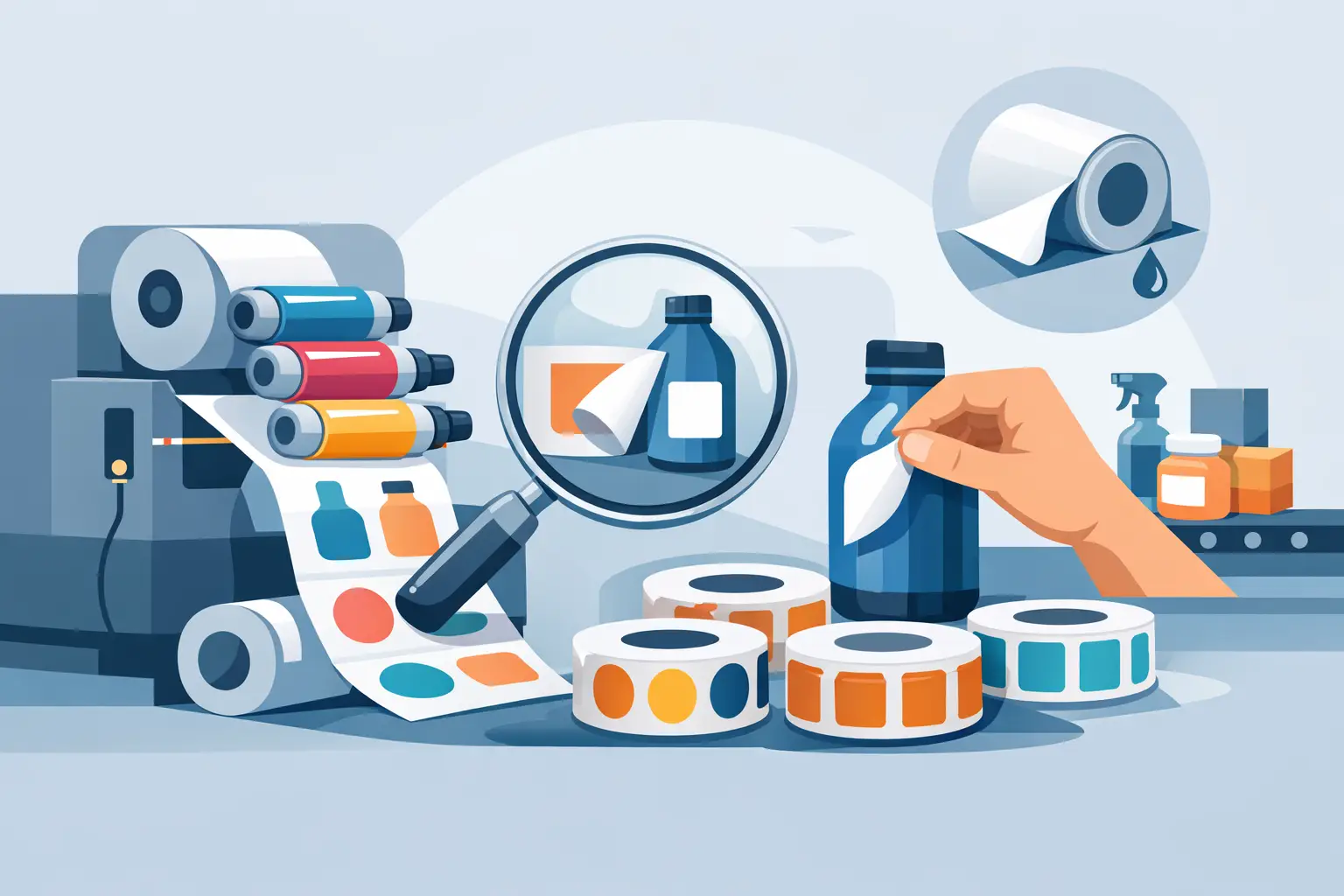
A label can look excellent on a press sheet and still fail when it reaches the production line, a refrigerated shelf, or a customer’s hands. That is why pressure sensitive label printing is more than choosing attractive artwork. The face stock, adhesive, liner, printing method, finishing, and application environment all need to work together.
For food brands, breweries, cosmetic companies, pharmaceutical manufacturers, and industrial suppliers, the right pressure sensitive label protects product information while supporting a consistent brand presentation. The wrong specification can lead to lifting edges, poor adhesion, scuffing, unreadable variable data, or unnecessary production cost.
What Is Pressure Sensitive Label Printing?
Pressure sensitive labels are self-adhesive labels. They consist of three primary layers: a printable face material, a pressure-sensitive adhesive, and a release liner that protects the adhesive until application. Once the liner is removed, the label is applied with pressure from a hand, roller, or automated labeling machine.
Unlike labels that require water, heat, or solvent activation, pressure sensitive labels are ready to apply. That makes them a practical choice for a broad range of packaging formats, including bottles, jars, pouches, boxes, tubes, cans, and industrial containers.
Their versatility is a major advantage, but it also means there is no single material or adhesive that fits every project. A paper label for a dry boxed food product has very different requirements than a film label for a refrigerated beverage bottle or a chemical container stored outdoors.
Start With the Application Environment
The most productive label conversations begin with the product and its real-world conditions, not the artwork file. Before selecting a material, determine where the label will be applied, how the package will be handled, and what it will encounter after application.
Temperature matters at every stage. A label may be applied in a warm production facility, then shipped through cold weather and stored in refrigeration. Some adhesives are designed for cold-temperature application, while others need a higher application temperature to develop proper adhesion. If bottles are labeled after filling and are wet with condensation, that condition must be addressed early.
Moisture, oil, abrasion, chemicals, and sunlight also affect material selection. Paper can be an effective and economical choice for many indoor applications, but a film construction is often better for products exposed to water, oils, or frequent handling. For industrial labels, durability may be the primary requirement, especially when labels need to remain readable through warehouse use, outdoor exposure, or contact with cleaning products.
The container itself is equally important. Glass, metal, corrugated packaging, polyethylene, polypropylene, and textured surfaces do not behave the same way. Low-surface-energy plastics can require specialized adhesives. Curved containers may need a flexible material that conforms cleanly without wrinkling or flagging at the edges.
Selecting the Right Face Stock and Adhesive
The face stock carries the printed image and gives the label its visual and functional character. Common options include paper, white film, clear film, metallic materials, textured stocks, and specialty constructions. Each creates a different result at a different cost.
Paper labels are often well suited to wine, craft products, dry goods, and cartons where tactile appeal or a natural appearance supports the brand. They can accept a wide variety of print finishes, but they are generally less resistant to moisture and rough handling than films.
Film labels, including polypropylene and polyester options, offer better resistance to water, tearing, oils, and many chemicals. Clear film can create a no-label look on clear containers, while white film provides strong opacity and dependable color reproduction. The trade-off is that film materials can cost more and may require more precise planning for application and recycling considerations.
Adhesive selection should never be treated as an afterthought. Permanent adhesives are common for consumer packaging, while removable adhesives may be appropriate for promotional labels, temporary instructions, or reusable containers. Freezer-grade, high-tack, wash-off, and chemical-resistant adhesive systems each serve specific needs.
A dependable printer will ask about container material, application temperature, storage conditions, and end use before recommending a construction. That process reduces the risk of discovering an adhesion problem after production has begun.
Pressure Sensitive Label Printing for Brand Impact
A product label has limited space to make a clear impression. Color accuracy, fine type, photography, gradients, metallic effects, and tactile finishes all influence how a package performs on the shelf. For growing brands, consistency also matters across multiple SKUs, product sizes, and reorder cycles.
Digital printing is particularly valuable when a project requires high-quality color, versioning, or flexible quantities. The HP Indigo 6900 Digital Press supports detailed graphics and short-to-medium runs without the plate costs associated with traditional processes. It can be a practical fit for seasonal releases, product line extensions, regional packaging, test-market runs, and frequent design updates.
That does not mean digital is automatically the best choice for every order. Longer, stable runs may benefit from another production approach depending on the label construction, number of colors, finishing requirements, and total volume. The right decision comes from evaluating the full project rather than focusing on unit price alone.
Finishing adds another layer of opportunity. Gloss and matte varnishes change the look and feel of the label. Lamination can improve scuff resistance. Foil, embossing, spot effects, and textured materials can help premium products stand apart. These details should support the brand and the product environment, not simply add complexity.
Compliance and Readability Cannot Be Secondary
For regulated and information-heavy products, label performance depends on more than appearance. Pharmaceuticals, supplements, foods, chemicals, and industrial products may require precise ingredient panels, warning statements, lot codes, barcodes, and handling instructions.
Small text needs adequate contrast and print clarity. Barcodes need to scan reliably after printing, finishing, application, and distribution. Variable information such as lot numbers or expiration dates must have a designated area that works with the customer’s coding equipment. A beautiful label that interferes with coding or scanning creates a production problem.
Artwork review is the right time to check label dimensions, mandatory copy, bleed, quiet zones around barcodes, and the placement of variable data. It is far less costly to resolve these details before printing than to correct them after labels are delivered to the plant.
Planning for Application and Production Efficiency
Pressure sensitive labels must be produced for the way they will be applied. Roll direction, core size, maximum roll diameter, label spacing, and unwind orientation all matter for automated labeling equipment. A label that is printed correctly but wound in the wrong direction can stop a production line.
Operations teams should provide equipment specifications early, especially for high-speed applications. If the label is hand applied, the priorities may shift toward easy dispensing, label stiffness, and practical roll sizes. For machine application, consistency in die cutting and roll winding becomes especially important.
Quantity planning also affects cost and turnaround. Ordering too few labels can increase the frequency of setup and shipping costs. Ordering too many can create storage issues or leave a brand with obsolete packaging after a regulatory or design change. The best order quantity balances unit cost with inventory risk and forecast accuracy.
For repeat programs, documented specifications are valuable. Once the approved material, adhesive, finish, die, roll format, and color expectations are established, future orders can move faster with fewer avoidable questions. This is where a long-term label partner brings real operational value.
Questions to Bring to Your Label Quote
A useful quote request includes more than label width, height, and quantity. Provide the container material and shape, application method, expected temperatures, exposure conditions, number of versions, finish preferences, and any compliance or barcode requirements. If you have existing labels that are failing, describe the failure clearly: lifting, bubbling, poor print durability, curl, adhesive residue, or scanning issues.
Artwork can help establish scope, but a production-ready label plan needs the technical context behind it. At Miles Label Company, that consultative approach helps match custom label requirements with practical production choices, fast turnaround expectations, and dependable repeat performance.
The next label order is an opportunity to prevent line issues before they start. Bring your packaging conditions, equipment details, and brand goals to the conversation early, and the finished label will be better prepared to do its job long after it leaves the press.