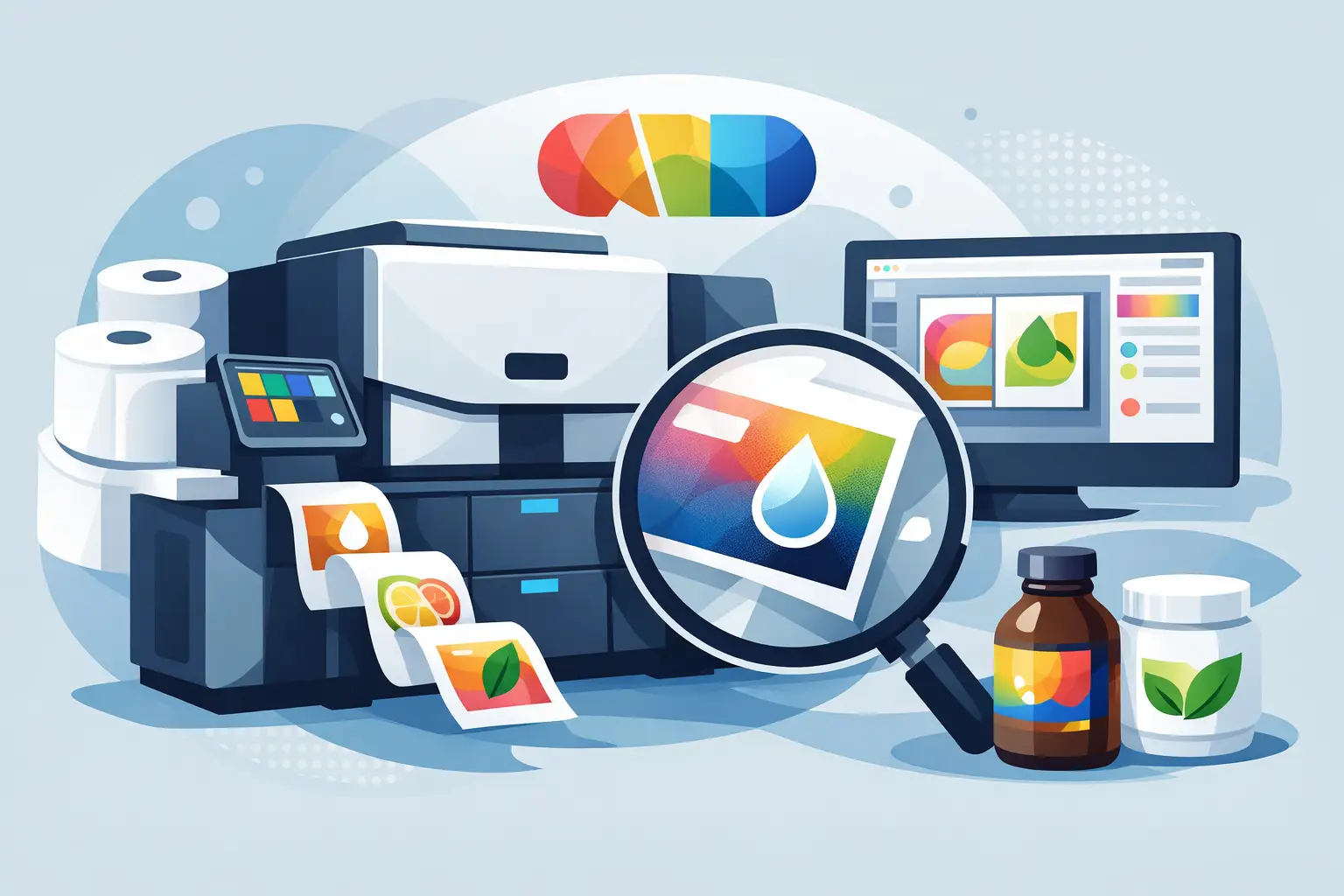
A label that looks different from one production run to the next creates problems far beyond the package. It can weaken shelf presence, delay approvals, and complicate inventory planning. So, what is HP Indigo printing? It is a high-quality digital printing process that uses liquid ElectroInk to produce detailed, consistent labels without the printing plates required by conventional methods.
For brands that need professional color, flexible quantities, and responsive production, HP Indigo technology fills an important role. It is particularly well suited to custom product labels where design quality matters but order quantities, versioning needs, or timelines make traditional plate-based printing less practical.
What Is HP Indigo Printing and How Does It Work?
HP Indigo printing is a digital electrophotographic process. Instead of transferring ink from engraved or raised printing plates, the press receives a digital artwork file and forms the image electronically. HP Indigo presses use liquid ElectroInk, which is applied to a photo imaging plate, transferred to an intermediate blanket, and then transferred to the label material under heat and pressure.
That process produces a very thin ink layer with a smooth, polished appearance. On the finished label, the result can closely resemble conventional offset print quality while retaining the setup and flexibility advantages of digital production.
For a label buyer, the production benefit is straightforward: approved artwork can move to print without waiting for plates to be created. This reduces upfront setup requirements and makes it easier to order multiple versions of a label, update regulated copy, test a limited product release, or replenish inventory based on actual demand.
At Miles Label Company, the HP Indigo 6900 Digital Press supports this kind of responsive label production for brands that need quality without unnecessary delays.
Why HP Indigo Printing Is a Strong Fit for Labels
A product label has to do more than carry a logo. It may need to reproduce fine type, ingredient panels, barcodes, variable information, regulatory language, and color-sensitive branding on a substrate that will be exposed to moisture, refrigeration, handling, oils, or other challenging conditions.
HP Indigo printing is built to handle detailed label work. Fine lines, small text, photographic graphics, gradients, and solid color areas can reproduce with high clarity when the artwork, material, and finishing specifications are properly selected. This matters for food packaging, health and beauty products, beverages, pharmaceuticals, and industrial products, where a label must perform visually and functionally.
Digital production also enables shorter, more practical production cycles. Because there is no plate-making stage, a printer can move more quickly from final file approval to press. The exact turnaround still depends on material availability, finishing requirements, proof approval, and production scheduling, but digital printing can remove a major source of lead time.
Consistent Color and Fine Detail
Brand color is often one of the first things a customer notices. A slightly off-color logo or muddy product image can make an otherwise well-made package look inconsistent. HP Indigo technology is valued for its ability to produce rich color and smooth tonal transitions, helping brands maintain a refined package appearance across label versions and repeat orders.
Color expectations should always be discussed during quoting and proofing. The material itself affects how ink appears. A bright white film, clear film, metallic substrate, textured paper, and uncoated stock will not all produce the same visual result. For color-critical work, a press proof or a defined color target helps establish the right expectation before full production begins.
Flexible Quantities and Versions
Traditional printing becomes more cost-efficient as volume rises because plate and setup costs are spread across more labels. HP Indigo printing changes that equation for short to medium runs and projects with frequent variation.
A brand may need one label design in several flavors, sizes, fragrances, or regional versions. A brewery may need rotating seasonal artwork. A manufacturer may need updated warnings, product claims, or multilingual copy. With digital printing, these versions can be produced from separate files without creating a new set of plates for each design.
This does not mean digital is automatically the best choice for every large-volume order. For long, stable runs with limited artwork changes, conventional printing may offer stronger unit economics. The right choice depends on quantity, number of SKUs, artwork complexity, delivery requirements, and the cost of carrying excess label inventory.
HP Indigo Printing Compared With Conventional Label Printing
Both digital and conventional printing methods have a place in professional label production. The decision should be based on the job, not on a one-size-fits-all preference.
Conventional flexographic printing typically requires printing plates and more press setup. That investment can be highly efficient for repeat orders in substantial quantities, especially when the artwork remains stable. It is a proven option for many high-volume label programs.
HP Indigo digital printing removes the need for plates and supports fast changes between jobs. It can be especially useful when a buyer needs lower minimum quantities, multiple label versions, variable data, or a quicker path from artwork approval to production. It also helps reduce the risk of ordering more labels than a new product launch or seasonal campaign can use.
The most cost-effective approach often depends on total program requirements, not simply the price per thousand labels. If a brand has 12 SKUs and each changes twice a year, the ability to print only what is needed may offset a higher per-label cost. Conversely, a single high-volume SKU that does not change may be a better candidate for a conventional process.
Common Applications for HP Indigo Digital Labels
HP Indigo printing works across many label categories because it combines quality with production flexibility. Food labels benefit from sharp product photography, nutrition information, and frequent promotional changes. Health and beauty labels often require premium color, fine decorative detail, and several scent or formula variations.
Beer, wine, and spirits labels can use digital production for limited releases, seasonal designs, and event-specific packaging. Water bottle labels and other beverage labels benefit from clean graphics and repeatable branding. Pharmaceutical and industrial labels may require highly legible text, accurate version control, and careful attention to material and adhesive requirements.
Produce stickers, small-format labels, and specialized product identifiers can also be good candidates when artwork changes or quantity needs are difficult to predict. The press is one part of the solution. Material selection, adhesive performance, die-cutting, varnish or lamination, and inspection requirements determine whether a label will work in its real-world environment.
What to Consider Before Choosing HP Indigo Printing
A digital press can produce an excellent label, but it cannot solve an unclear specification. Before requesting a quote, define the label size, finished shape, application surface, expected environment, and quantity per SKU. Include whether the label will face refrigeration, freezer conditions, moisture, oil, abrasion, chemicals, outdoor exposure, or hand application.
Artwork preparation also matters. Supply the correct dieline, confirm bleed and safe areas, and use high-resolution images. Barcode placement and quiet zones should be protected. For regulated labels, final approval of ingredient lists, warnings, dosage details, and other required copy should happen before the job enters production.
Finishing should be planned alongside printing rather than treated as an afterthought. A gloss varnish can add visual brightness, while matte finishes can create a more understated look. Lamination may improve scuff resistance and durability. White ink, specialty effects, and appropriate film or paper stocks can change both the appearance and performance of the finished label.
When Digital Printing Makes Business Sense
HP Indigo printing is often a practical choice when speed, variation, and inventory control matter as much as unit price. It can support product launches, market tests, seasonal programs, short runs, and repeat orders that need fast replenishment. It is also useful for established brands that want to avoid tying up cash and warehouse space in large quantities of labels that may become outdated.
The strongest label programs begin with a production conversation, not just an artwork upload. A capable label partner can help identify whether digital production fits the run size, recommend a material for the application, and plan finishing that supports the product’s use environment.
If your packaging needs sharp print quality, flexible ordering, and a production path built around real business requirements, HP Indigo printing is worth considering before the next label run goes to press.