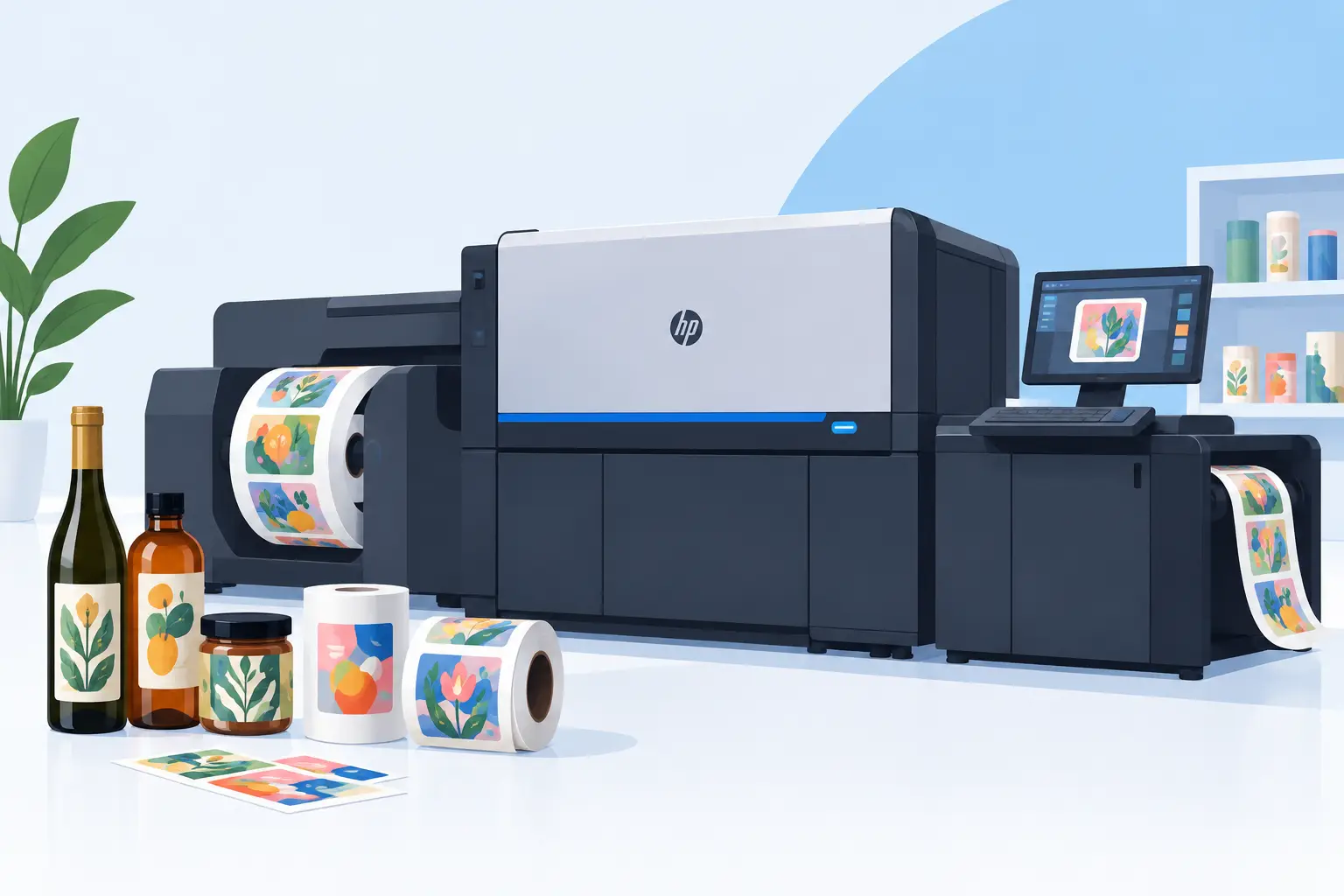
A new label design should not force a brand to order more inventory than it can use, wait weeks for plates, or accept inconsistent color from one production run to the next. This HP Indigo 6900 label printing review looks at what the press brings to real packaging programs: high-impact color, short-run efficiency, version control, and the practical limits buyers should consider before selecting a print method.
For food, beverage, health and beauty, pharmaceutical, and industrial products, a label has to do more than look right on a monitor. It must print consistently, apply correctly, hold up in its intended environment, and arrive when production needs it. The HP Indigo 6900 is designed to support that level of flexibility for pressure-sensitive label work and other digitally printed label applications.
What the HP Indigo 6900 Does Well
The strongest case for the HP Indigo 6900 is its ability to combine premium visual quality with production flexibility. It uses HP ElectroInk technology to produce fine detail, smooth tonal transitions, readable small type, and vibrant graphics that help packaged products stand apart on the shelf.
That matters when a label includes photography, skin tones, gradients, metallic-looking effects, detailed illustrations, or a brand color that cannot drift from run to run. Digital printing also eliminates the plate-making process required for conventional flexographic printing. For a buyer, that can mean fewer prepress steps and a faster path from approved artwork to finished labels.
The press is particularly useful when label quantities are too large for a basic short-run solution but too uncertain, too versioned, or too time-sensitive for a conventional run to be efficient. A growing consumer brand may need several SKUs, seasonal graphics, or regional versions without storing months of excess inventory. A manufacturer may need labels with changing product information, batch references, or serialized data.
HP Indigo 6900 Label Printing Review: Print Quality
Print quality is where digital label presses are often judged most closely, and rightly so. Packaging buyers need confidence that the first label and the last label in an order will reflect the approved design. The HP Indigo 6900 is built for demanding graphics, with color capabilities that support a broad gamut and close brand-color matching.
Fine reverse type, barcode areas, ingredient panels, and regulatory copy all benefit from controlled registration and sharp imaging. For pharmaceutical or industrial labels, readability is not simply a design preference. It can affect scanning, traceability, product identification, and compliance workflows. For cosmetics, wine, craft beverages, and specialty foods, the value is often visual: rich color, crisp details, and a finish that supports the intended brand position.
Still, print quality should be evaluated on the actual label construction, not a generic press sample. The face stock, adhesive, coating, laminate, and finishing method all affect the final result. A high-gloss beverage label, a textured paper wine label, and a durable chemical container label have different performance requirements. A qualified label manufacturer should test the complete construction when the application involves moisture, refrigeration, abrasion, oils, chemicals, or outdoor exposure.
Color consistency requires a controlled process
Digital equipment gives printers useful tools for managing color, but process discipline remains essential. Accurate artwork, approved standards, calibrated production conditions, and a clear proofing process help protect brand colors across repeat orders.
For buyers with a defined corporate color or a product line that spans multiple label sizes, color expectations should be discussed early. The right question is not simply whether a press can print a color. It is whether the label supplier can establish a repeatable production standard for that color on the selected material.
Speed and Short-Run Economics
The HP Indigo 6900 changes the economics of label production most clearly when jobs require flexibility. Because there are no printing plates to create, a printer can move efficiently between designs, versions, and smaller quantities. That reduces a common packaging problem: ordering a large run to lower the unit price, then disposing of obsolete labels after a formula, regulation, promotion, or package size changes.
Digital printing is a strong fit for product launches, market tests, limited editions, seasonal packaging, and SKU-heavy portfolios. It also gives procurement teams another option when a standard label is running low and production cannot wait for a lengthy conventional setup.
Variable data is another meaningful advantage. Elements such as sequential numbering, QR codes, personalized messaging, regional copy, and promotional codes can change within a run without stopping to remake plates. The business value depends on the program, but for traceability-driven products or targeted campaigns, it can reduce complexity considerably.
That does not mean digital is always the lowest-cost answer. At very high volumes of a stable design, flexographic printing may offer a lower cost per label. The break point depends on artwork complexity, colors, material, finishing, number of SKUs, required quantity, and how often the design changes. The best production choice is based on total program cost, not only a quoted per-thousand price.
Material and Finishing Considerations
A press is only one part of a finished label. The label must also fit the container, application equipment, shipping conditions, storage environment, and end use. The HP Indigo 6900 supports a range of label materials, but material selection should begin with the product application.
For example, a refrigerated food container may require an adhesive that performs in cold and damp conditions. A personal care bottle used in a shower may need moisture resistance and a protective laminate. An industrial drum may require durable film materials, permanent adhesion, and resistance to chemical contact. Wine labels may call for paper stocks and finishes that reinforce a premium look while still handling bottling and distribution conditions.
Finishing choices matter just as much. Varnishes, laminates, foils, embossing, die cutting, and specialty coatings can change a label from functional to shelf-ready. They can also affect lead time and cost. A practical recommendation is to identify which visual features truly support the product and which add expense without improving performance or shopper appeal.
Ask for application-specific guidance
Before quoting a job, a production partner should understand the container shape, label dimensions, application method, expected temperatures, product exposure, and required durability. A label that looks excellent as a flat sample can fail if it wrinkles on a tapered bottle, lifts at the edges, or cannot withstand its actual environment.
This is especially relevant for regulated and technical applications. Labels for pharmaceuticals, supplements, chemicals, and industrial products may need specific material choices, barcode verification, legibility standards, and documented production controls. Digital capability helps with versioning and variable information, but it does not replace careful specification development.
Where the Press Is a Strong Fit
The HP Indigo 6900 is well suited to brands that need premium presentation without committing to large, inflexible inventories. It performs especially well for consumer packaged goods with frequent artwork updates, multiple flavors or varieties, and variable quantities across SKUs.
Food and beverage companies can use it for new product introductions, craft beverage labels, specialty packaging, and promotional releases. Health and beauty brands can benefit from its graphic reproduction for color-sensitive packaging and detailed design. Industrial and pharmaceutical buyers can use digital flexibility for controlled versions, serialized information, and shorter replenishment runs where accuracy is essential.
At Miles Label Company, the press is most valuable as part of a broader manufacturing approach. The equipment supports fast-turn digital work, while material knowledge, finishing capability, and production planning determine whether the finished label performs as intended.
Questions to Settle Before You Quote
A productive label quote begins with clear production information. Buyers should provide final or near-final artwork, label dimensions, estimated quantities by SKU, the container or application surface, and the environment the label will face. If color matching, variable data, special finishes, or a firm delivery date are part of the project, those details should be included from the start.
It also helps to discuss future demand rather than only the first order. If the initial run is a market test but the product may scale quickly, the printer can recommend a path that protects launch speed now without creating unnecessary changes later. If repeat orders will be frequent, approved specifications and production standards can make replenishment more predictable.
The right question is not whether the HP Indigo 6900 is better than every other label-printing method. It is whether its combination of quality, speed, version flexibility, and inventory control fits your label program. Bring the real application, artwork, and quantity plan to the conversation, and a capable production partner can help make the right press decision before the job reaches the production floor.