
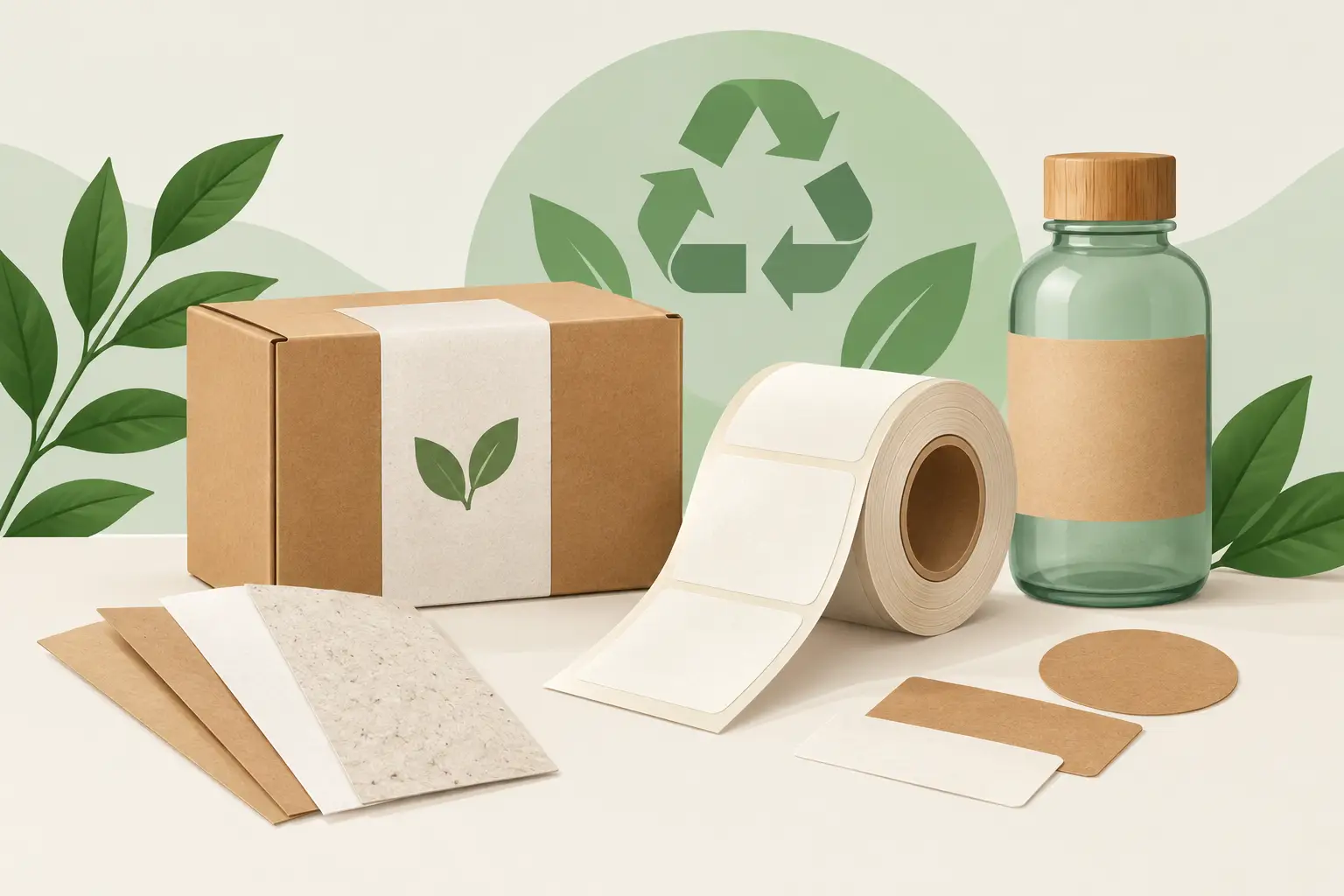
A sustainability claim can be undermined by one small packaging component: the label. Sustainable label materials need to do more than look environmentally responsible on a specification sheet. They must print cleanly, apply consistently, withstand the product’s real-world environment, and support the packaging system’s intended end-of-life path.
For brand owners and packaging teams, the right choice starts with the product, container, distribution conditions, and recovery goals. A paper label that works well on a dry food carton may fail on a refrigerated beverage bottle. A recyclable film label may be the right answer for one plastic container and create sorting challenges on another. Material selection is a production decision, not a one-size-fits-all marketing decision.
What Makes a Label Material Sustainable?
Sustainability can refer to several different material attributes. Some label stocks contain recycled content. Others use responsibly sourced paper fiber, renewable raw materials, thinner constructions, or films designed to improve compatibility with specific recycling streams. Labels can also be selected to reduce material use, support container reuse, or help a package separate more effectively during recycling.
No single attribute makes every label sustainable. The strongest option depends on the full label construction: facestock, adhesive, liner, ink coverage, coatings, and the container itself. It also depends on what happens after use. A label designed for a paper package has different requirements than one applied to PET, HDPE, glass, aluminum, or flexible packaging.
That is why sustainability discussions should begin with practical questions. What is the package made from? Will it be exposed to moisture, oil, chemicals, abrasion, freezer temperatures, or direct sunlight? Is the package likely to be recycled, composted, reused, or discarded? Those answers narrow the material options quickly and prevent a well-intended choice from becoming a performance problem.
Sustainable Label Materials Start With the Package
The label and container should be evaluated as a system. When the two are selected independently, brands can run into avoidable issues with application, shelf appearance, durability, or end-of-life processing.
Paper Labels for Fiber-Based Packaging
Paper labels can be a strong fit for cartons, dry goods, jars, bottles, and many retail applications. Options may include papers with recycled content or fiber from responsibly managed sources. They offer a familiar tactile feel and can support premium, natural, craft, or heritage-oriented branding.
However, paper is not automatically the right environmental choice for every application. Refrigeration, condensation, oils, and repeated handling can require specialized paper constructions, protective coatings, or a film alternative. Those added elements should be considered when evaluating the total package design and recovery path.
For food products, beverages, and health and beauty goods, paper labels can deliver excellent print results when the material is matched to the use conditions. The key is confirming that the adhesive and finish will hold up through filling, shipping, storage, and consumer use.
Film Labels and Recycling Compatibility
Film labels are often necessary when durability is the priority. They can resist moisture, tearing, scuffing, and exposure to demanding product environments. This makes them common for water bottles, personal care products, household chemicals, industrial containers, and refrigerated items.
Certain film constructions may help improve compatibility with a container’s recycling stream, particularly when label and bottle materials are engineered to work together. For example, a label that is compatible with a specific plastic recovery process may support better material separation or reduce contamination concerns. The correct approach depends on the container resin, label size, adhesive, ink system, and local recycling infrastructure.
A durable film label can also reduce waste before the package reaches its end of life. If a label stays readable through distribution and use, it helps preserve required product information, lot codes, directions, and brand presentation. For regulated and industrial products, that durability is not optional.
Recycled Content and Reduced Material Use
Recycled-content label stocks can help brands reduce reliance on virgin material. They may be available in paper and film formats, although availability, appearance, and performance vary by material family. Recycled paper may show natural flecks or shade variation, which can be a desirable design feature for some brands but may not suit every color standard or premium finish.
Material reduction is another practical consideration. Lighter-weight facestocks or thinner film constructions can reduce the amount of material used per label and may improve roll yield. That can mean more labels per roll, fewer roll changes, and lower shipping weight. The trade-off is that thinner materials must still run reliably on application equipment and provide enough durability for the package environment.
Wash-Off and Reuse-Supporting Adhesives
For refillable or returnable packaging, the adhesive can be as important as the facestock. Wash-off label constructions are designed to release under defined washing conditions, helping containers move through reuse or recycling processes more effectively.
These systems require careful testing. Water temperature, wash chemistry, bottle surface, label coverage, and ink or varnish selection all influence performance. A label must remain firmly attached throughout normal distribution and consumer handling, then release when the intended process occurs. This is a technical balance that should be validated early, not after artwork is approved.
Performance Requirements Still Come First
A sustainable label that fails in the field is not a sustainable outcome. Rework, rejected containers, relabeling, damaged inventory, and shortened product life create their own material and cost impact.
Start by defining the conditions the label must survive. Beverage labels may face ice buckets, condensation, and refrigeration. Beauty labels may encounter oils, lotions, and repeated moisture exposure. Industrial labels may need to remain legible around solvents, outdoor weather, abrasion, or temperature swings. Pharmaceutical labels must support clear, durable information within strict packaging and traceability requirements.
Print technology also matters. Fine type, barcodes, variable data, opaque white, metallic effects, and high-impact brand color all influence material and finishing decisions. Digital printing can support high-quality color, versioning, and shorter runs without requiring the setup associated with traditional printing methods. Still, the best printed result comes from pairing the artwork with a compatible label stock and finish.
At Miles Label Company, material recommendations are considered alongside print quality, application needs, and production timelines. The goal is not to force a project into a single material category. It is to produce a label that performs as specified and supports the brand’s packaging objectives.
Avoid Broad Claims Without Documentation
Sustainability language on packaging is closely scrutinized by customers, retailers, and regulators. Terms such as recyclable, compostable, biodegradable, and eco-friendly can be misleading if they are not tied to the actual material, package format, and available collection or processing conditions.
A better practice is to make specific, supportable claims. If a label contains recycled content, identify that attribute accurately. If a construction is designed to work with a particular recycling process, make sure the statement reflects the complete package and any relevant conditions. If compostability is a goal, confirm that the label, adhesive, inks, and package work together within the applicable composting environment.
Packaging teams should also keep technical documentation from material suppliers and review any retailer or industry requirements before finalizing copy. Sustainability messaging should be approved with the same care given to nutrition panels, ingredient statements, warnings, and compliance information.
How to Specify Sustainable Label Materials
The most efficient projects address material selection before a purchase order is placed. Provide your label printer with the container type and dimensions, application method, product contents, expected storage conditions, artwork requirements, run quantity, and end-of-life objective. If the package will be chilled, exposed to water, filled hot, or used outdoors, say so from the start.
It also helps to prioritize the decision. Is the primary goal recycled content, compatibility with a recycling stream, reduced material weight, renewable fiber, or support for package reuse? Those goals can overlap, but they do not always point to the same construction. Clear priorities make it easier to compare options honestly.
Request samples and test them on the actual container whenever possible. Check adhesion after filling, readability after handling, scuff resistance in shipping, and appearance after exposure to the product environment. For high-volume programs, a production trial can be a worthwhile step before a full release.
The right label should support the product long after it leaves the press. Build the conversation around the package’s real conditions and recovery goals, and you will be in a stronger position to choose materials that perform well, represent the brand accurately, and make practical progress toward more responsible packaging.