
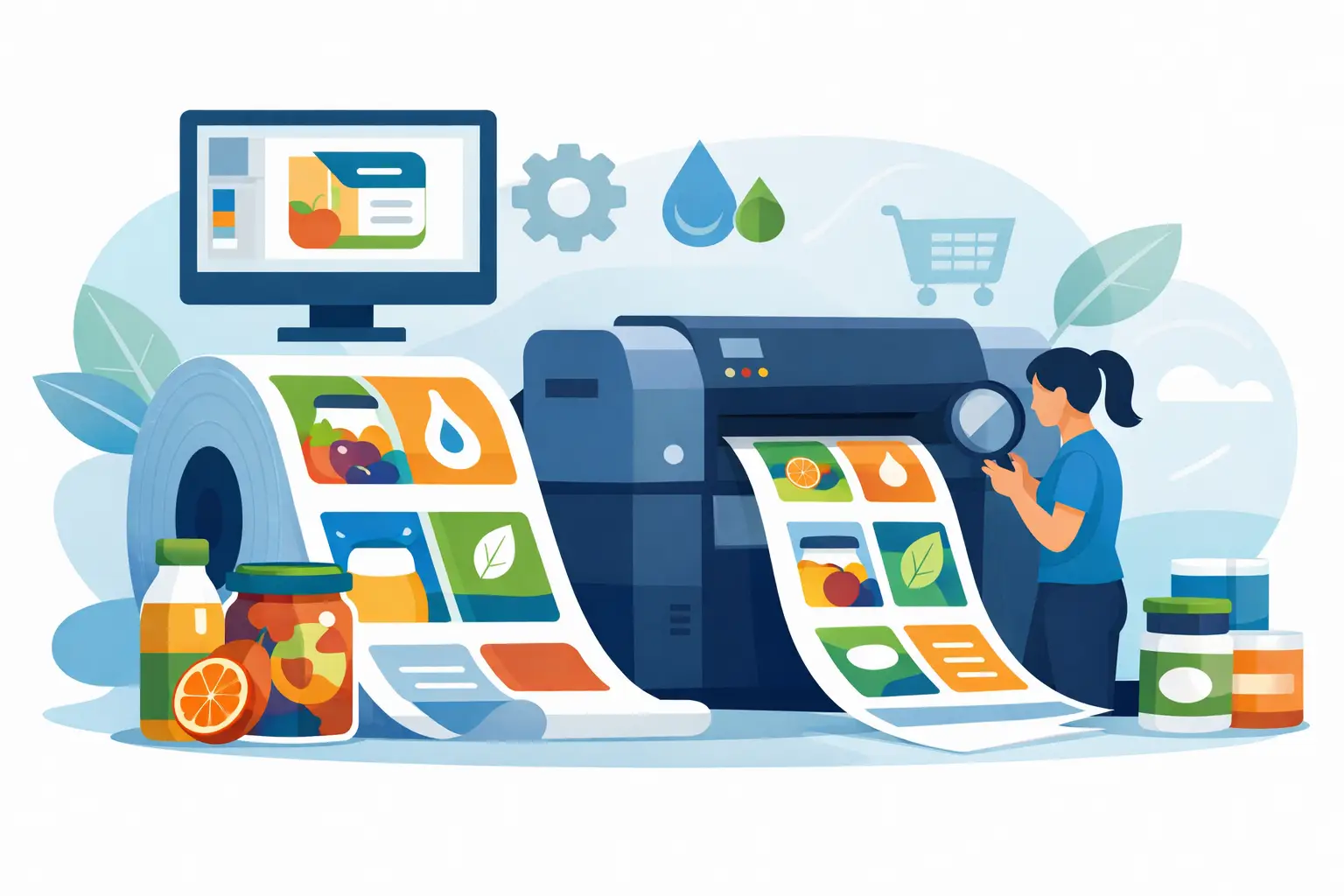
A food label can look perfect in a proof and still fail on press, on the container, or in the supply chain. That is why custom food label printing is not just a design decision. It is a production decision that affects compliance, packaging line performance, product presentation, and reorder speed.
For food manufacturers and brand teams, the right label partner helps reduce risk before labels ever reach the applicator. Material choice, adhesive performance, print consistency, color control, and lead times all matter. If one of those variables is off, the problem usually shows up late – after packaging has been scheduled and product is ready to move.
What custom food label printing needs to do
Food labels have to do more than carry artwork. They need to identify the product clearly, support required information, hold up in the intended environment, and present the brand well on the shelf. Those goals sound straightforward, but food packaging rarely lives in a single, controlled condition.
Some labels need to handle refrigeration and condensation. Others need to stay secure on curved containers, flexible pouches, glass jars, plastic tubs, or corrugated secondary packaging. A premium sauce label has different demands than a frozen food label, and both differ from a dry goods SKU produced in multiple versions.
That is where a consultative print process matters. A dependable converter will ask how the product is packed, stored, shipped, and displayed. The label stock, adhesive, finish, and print method should be selected around those realities, not treated as an afterthought.
The main factors that affect food label performance
Material selection comes first
Face stock choice influences both appearance and durability. Paper labels may work well for certain dry or short-life applications, especially when a natural or traditional look fits the brand. Film materials are often the better fit when moisture, abrasion, or temperature changes are part of the environment.
There is no universal best material. A refrigerated beverage, a deli container, and a pantry product all create different demands. The right recommendation depends on container type, storage conditions, and the level of visual finish the brand expects.
Adhesive has to match the package environment
Adhesive problems can be expensive because they usually show up during application or after distribution. Labels may lift, wrinkle, or fail to bond if the adhesive is not suited to the package surface or temperature range.
Containers used for food products can vary widely – glass, PET, HDPE, metal, paperboard, and more. Some are applied in cold environments. Some are filled hot. Some move through wet conditions before they ever reach retail. Good custom food label printing starts with knowing those conditions upfront so the adhesive can be specified correctly.
Print quality affects both brand image and accuracy
Food packaging often competes in crowded retail environments where small differences in print quality stand out. Fine type, ingredient panels, barcodes, lot coding areas, and color-critical branding all need to reproduce cleanly and consistently.
For emerging brands, strong print quality helps establish credibility on shelf. For established brands, it protects continuity across production runs and SKU variations. Digital capabilities such as the HP Indigo 6900 Digital Press are especially useful when brands need high-quality graphics, tighter version control, and efficient short-to-medium runs without sacrificing appearance.
Finish and coating are functional choices too
Gloss, matte, soft-touch, and protective coatings change the look of a label, but they also influence performance. A premium finish may support shelf appeal, while a more protective surface may be needed when labels face scuffing or moisture.
This is one of the common trade-offs in food packaging. A highly decorative look may not be the best fit for every use case, especially if the label needs to survive aggressive handling or cold-chain conditions. The right choice balances presentation with durability.
Why speed matters in custom food label printing
Food packaging schedules are rarely flexible for long. Product launches shift, ingredient updates happen, seasonal promotions come together quickly, and inventory planning can change with little notice. Label production delays can create broader packaging delays, especially when labels are one of the final components needed before a run starts.
That is why turnaround time should be evaluated as part of supplier capability, not treated as a bonus. Fast service only helps if quality stays consistent and specifications are followed. A dependable manufacturing partner should be able to move quickly while still managing proofs, material requirements, versioning, and repeatability.
For many buyers, the real value is not just speed on a single order. It is the ability to support repeat production with fewer surprises. That includes organized job history, reliable color matching, and a quoting process that helps teams make decisions before time is lost.
When digital printing makes the most sense
Not every food label job has the same run profile. Some products need high volumes with stable artwork over long periods. Others require frequent changes, multiple SKUs, test-market quantities, or regional versions. That is where digital printing can offer a practical advantage.
Digital production is often a strong fit for shorter runs, faster job changes, and projects where brands need flexibility without the delays associated with more complex setup. It can also support cleaner execution for variable data or design updates across product families.
That does not mean every order should be digital. The right print path depends on quantity, artwork complexity, budget, and timeline. An experienced manufacturer will look at the full project and recommend the most efficient route instead of forcing every job into the same production model.
Common issues buyers should address before ordering
Many label problems begin long before printing. Art files may not be built correctly for the package size. Regulatory content may be incomplete. Container dimensions may change late in development. Application methods may not be confirmed until after labels are ordered.
The more clarity a buyer can provide upfront, the smoother production tends to be. Container type, label dimensions, application method, storage conditions, expected order volumes, and finish preferences all help shape the right recommendation. If one of those elements is still in flux, it is better to say so early.
This is especially true for growing food brands. Early-stage companies often need guidance on balancing cost, speed, and shelf impact. Larger manufacturers may be more focused on consistency, compliance, and supply continuity across repeat orders. Both benefit from working with a printer that can identify risks before they turn into delays.
Choosing a supplier for custom food label printing
A food label supplier should be evaluated on more than price per thousand. Print quality matters, but so do responsiveness, technical knowledge, material access, and the ability to support the packaging realities of food products.
A capable partner should be prepared to discuss substrate options, adhesive performance, environmental conditions, run sizes, and expected turnaround. They should also be able to produce labels that align with the visual standards of the brand while meeting practical production needs.
Experience across multiple label categories can be an advantage here. A manufacturer that supports food, beverage, health and beauty, industrial, and regulated applications often brings broader production discipline to the table. That kind of range tends to improve problem-solving, especially when a project includes specialized materials, tighter tolerances, or demanding schedules.
Miles Label Company approaches label production with that balance in mind – craftsmanship, modern press capability, and the responsiveness buyers need when timelines are real and packaging decisions carry cost.
The value of getting it right early
Good labels do not happen by accident. They come from matching the print process to the product, the package, and the production schedule. When custom food label printing is handled correctly, labels apply cleanly, hold up in the field, represent the brand well, and reorder without unnecessary friction.
That is the standard worth aiming for. If your next food label project needs to move quickly and perform reliably, start with the production details that will matter after the artwork is approved. The right decisions there tend to save the most time later.