
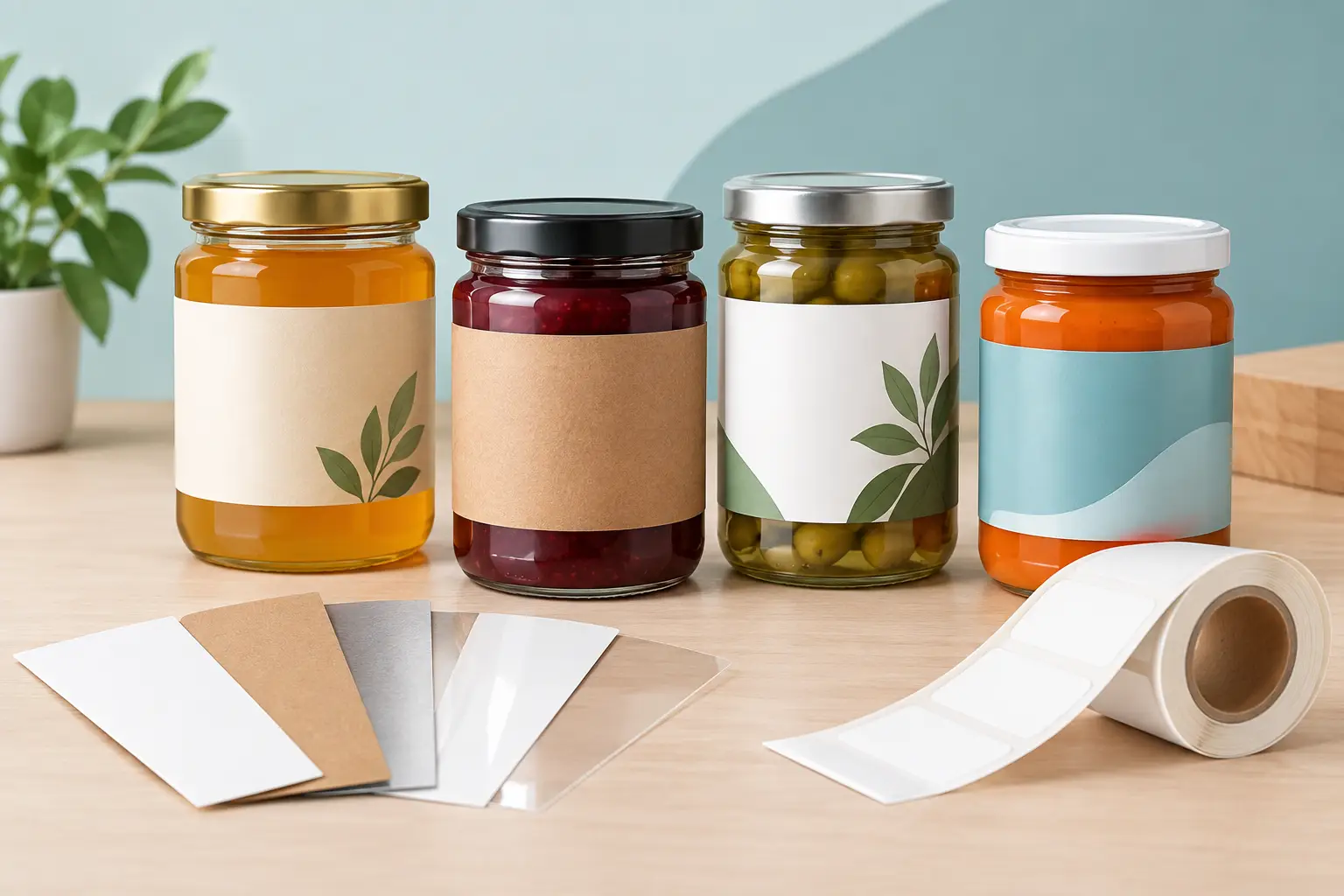
A glass jar can make a product look premium before a customer reads a single word. But glass jar label materials have to do more than look good on a shelf. They must adhere to a smooth surface, tolerate the product environment, hold color through handling, and arrive ready for efficient application on your production line.
For food, beverage, beauty, candle, and specialty product brands, the right material choice affects appearance, durability, application performance, and total packaging cost. A label that wrinkles in refrigeration or lifts after oil exposure can undermine an otherwise well-designed package. Material selection should start with the real conditions the jar will face, not just the desired shelf appearance.
Start With the Jar’s Actual Environment
Glass itself is a stable and highly printable packaging surface, but the label is exposed to whatever happens around the jar. A dry pantry product requires a different construction than refrigerated salsa, a bath salt jar stored in a humid bathroom, or a candle jar exposed to heat during filling and use.
Consider the full product journey: filling, labeling, shipping, warehouse storage, retail display, consumer use, and disposal or reuse. Temperature changes, condensation, oils, water, abrasion, and repeated handling all influence which label stock and adhesive will perform reliably.
A clear answer to a few production questions can narrow the field quickly. Will labels be applied to room-temperature jars or cold glass? Is the jar likely to sweat in a refrigerator or ice bucket? Does the product contain oil that may contact the outside of the container? Will customers wash or reuse the jar? These details matter as much as label size or artwork.
Common Glass Jar Label Materials
Paper Labels for Dry, Shelf-Stable Products
Paper is a practical choice for many glass jars, especially dry food items, spices, coffee, candles, and specialty pantry goods. It offers a familiar tactile quality and can support a range of finishes, from clean matte branding to a more textured, handcrafted presentation.
Uncoated paper works well when a natural or artisan appearance is central to the brand. Coated paper generally delivers sharper image reproduction and more color consistency. Paper can also be paired with a protective varnish or laminate when the product needs more resistance to scuffing and light moisture.
The trade-off is durability. Standard paper labels are not the best fit for prolonged moisture, refrigeration, or frequent exposure to oils. They can absorb water, soften at the edges, and show wear sooner than film materials. For a dry product in a controlled environment, paper may be cost-effective and visually appropriate. For harsher conditions, film is usually the safer choice.
BOPP Film for Moisture and Oil Resistance
Biaxially oriented polypropylene, commonly called BOPP, is one of the most versatile materials for glass packaging. It resists moisture and oils far better than paper, remains stable in refrigerated conditions, and provides a smooth surface for crisp graphics.
White BOPP creates an opaque, bright label face that helps colors stand out. It is often used for refrigerated foods, sauces, condiments, personal care products, and other items that may encounter water or oils. Clear BOPP is useful when the brand wants the product or glass container to remain visible, creating a no-label look without sacrificing the benefits of a film label.
BOPP does have a different feel from paper. Brands seeking a rustic, tactile package may prefer a paper stock or a specialty film treatment. Still, when durability and dependable appearance are priorities, BOPP is often the strongest starting point.
Clear Film for a No-Label Appearance
Clear film labels can make printed graphics appear directly on the jar. This approach is popular for premium foods, beauty products, candles, and beverages where product visibility supports the brand story.
The quality of the glass and the application process become more visible with clear material. Air bubbles, adhesive patterns, fingerprints, and crooked application are harder to hide than they are with an opaque label. White ink may also be needed behind selected artwork so colors remain accurate and readable against the product inside the jar.
Clear film is best specified with the product color, fill level, and shelf lighting in mind. A dark sauce, amber candle wax, or pale cream can change how transparent areas and printed colors are perceived.
Vinyl and Specialty Films for Demanding Conditions
When labels need higher flexibility, stronger weather resistance, or performance in more demanding industrial environments, vinyl or other specialty films may be appropriate. These materials can be useful for chemical products, outdoor applications, and containers that receive frequent handling or washing.
They are not automatically the right answer for every jar. Specialty materials can add cost, and their value depends on the actual exposure conditions. Matching the material to the application prevents over-specifying a label construction that the package does not need.
Adhesive Is Part of the Material Decision
A high-quality face stock cannot compensate for the wrong adhesive. Adhesive selection determines whether a label holds securely to glass through labeling, storage, transportation, and consumer use.
Permanent adhesive is the standard choice for most retail glass jars. It provides a secure bond for products intended to remain labeled throughout their usable life. For refrigerated products, a cold-temperature adhesive may be necessary, particularly when labels are applied to chilled containers or must bond before the adhesive has time to fully set.
Removable adhesive is useful when labels are intended to come off cleanly, such as reusable storage jars, promotional labels, or temporary product identification. However, removability can be affected by heat, time, moisture, and the glass surface. It should be tested under actual use conditions rather than assumed from a material description.
Glass jars should also be clean and dry at application. Dust, oil, moisture, and mold-release residue can interfere with adhesion. A dependable label program considers both the adhesive construction and the condition of the containers arriving at the labeling line.
Protect the Printed Surface
The label face material handles environmental exposure, but a protective finish helps preserve the printed design. A varnish can provide a cost-conscious layer of scuff resistance and is suitable for many standard applications. Lamination adds a more substantial protective film and is often chosen for labels exposed to repeated handling, moisture, oils, or abrasion.
Matte finishes can create a refined, contemporary look and reduce glare under retail lighting. Gloss finishes tend to make colors appear more saturated and can give food and beauty products a polished shelf presence. The right finish is not only a design decision. It should also reflect how much handling and environmental stress the label will receive.
For brands using metallic effects, spot gloss, textured surfaces, or other decorative details, request production samples on the selected material. A finish that looks excellent in a flat proof may perform differently once wrapped around a curved glass jar.
Design and Application Details That Affect Results
Glass is often cylindrical, and that creates practical design considerations. A large label on a small-diameter jar can wrinkle, tunnel, or overlap if the material, adhesive, and label shape are not suited to the curve. Tapered jars need even more attention because a rectangular label may not sit flat across the changing diameter.
Label size should leave enough clearance from the jar’s shoulder, base, seams, and raised glass features. Artwork also needs appropriate bleed and safe margins so critical copy, nutrition information, barcodes, lot codes, and regulatory statements remain readable after trimming and application.
Digital printing is particularly useful when brands need multiple varieties, seasonal designs, short runs, or versioned labels without the long setup cycles associated with conventional printing. It can support high-quality color while giving purchasing teams more flexibility in order quantities and product changes.
Test Before Committing to Production
The most reliable way to select glass jar label materials is to test a finished construction on the actual package. Apply labels using the intended process, then expose sample jars to the conditions the product will encounter. Check for edge lift, bubbling, wrinkling, print scuffing, color changes, and barcode readability.
For refrigerated products, test cold storage and condensation. For oil-based foods and personal care products, assess contact with spills and residue. For candles, consider heat exposure and whether the jar may be handled repeatedly. For products sold online, include shipping and carton abrasion in the evaluation.
A label supplier with production experience can help identify the right material, adhesive, finish, and print approach before a problem reaches the line. At Miles Label Company, the goal is to make material selection practical: match the label construction to the package, product environment, artwork, and production requirements, then move forward with confidence.
The best label is not simply the most premium material on a swatch card. It is the construction that protects the brand, performs consistently on the jar, and supports efficient production from the first run through repeat orders.