
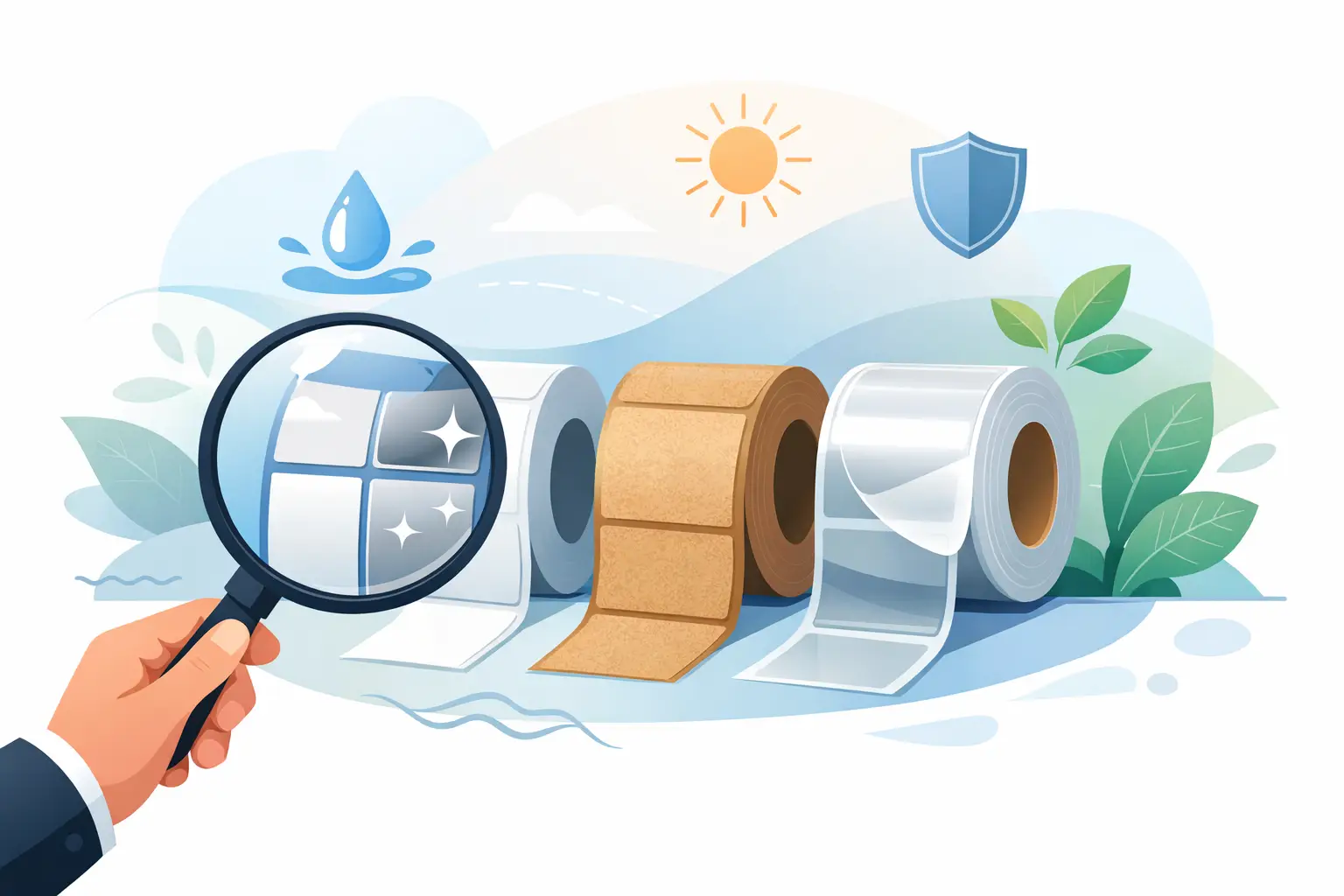
A label can look perfect on press and still fail in the field. It peels in a cold room, scuffs on a retail shelf, wrinkles on a curved bottle, or loses legibility in a chemical environment. That is why knowing how to choose label materials matters early in the packaging process, not after artwork is approved.
For manufacturers, brand owners, and packaging buyers, the right material choice affects more than appearance. It influences application speed, durability, compliance, cost, and how well the finished product performs through filling, shipping, storage, and end use. A strong label program starts by matching material performance to real operating conditions.
How to Choose Label Materials for Real-World Use
The best label material is not the most expensive option or the one with the glossiest finish. It is the one that fits the product, the container, and the environment. Paper may be the right choice for dry consumer goods with short distribution cycles. Film may be necessary for moisture, abrasion, or squeeze-container applications. The right answer depends on what the label needs to do after it leaves the press.
A practical way to evaluate materials is to start with five variables: the container surface, environmental exposure, print and branding requirements, regulatory needs, and budget. When one of these is overlooked, problems usually show up in production or on the shelf.
Start with the container surface
Label materials need to conform to the package they are applied to. A flat corrugated carton places different demands on a label than a narrow glass bottle, a flexible pouch, or a textured HDPE container. If the surface is curved, squeezable, rough, or low-energy, the face stock needs enough flexibility to stay down cleanly.
Paper materials often work well on stable, dry packaging with straightforward application. They can provide a classic look and strong print quality at a competitive cost. But paper has limits. On containers exposed to moisture or heavy handling, it may scuff, absorb water, or show edge wear faster than film.
Film materials such as BOPP, polypropylene, polyester, or vinyl are typically chosen when durability matters more. They resist moisture better, hold up to abrasion, and perform well on many consumer packaged goods, beverage, beauty, and industrial applications. They also tend to conform better to contoured containers. The trade-off is cost and, in some cases, a different visual or tactile feel than paper.
Consider moisture, temperature, and handling
One of the fastest ways to narrow material options is to look at the product environment. A label on a dry pantry item has very different requirements than a label on a refrigerated beverage, a bath-and-body product used in a wet setting, or an industrial chemical stored outdoors.
Moisture is often the deciding factor. If the label will face condensation, washdown conditions, or repeated contact with water, film materials are usually the safer choice. A paper label can still be used in some refrigerated settings, but only if the application and storage conditions are controlled carefully.
Temperature matters just as much. Labels applied in cold-fill environments, used in freezers, or exposed to heat need materials and adhesives that can handle those conditions without lifting or distorting. A material that performs well at room temperature may fail during cold application or after repeated temperature swings in distribution.
Handling also needs attention. Products that move through warehouses, shipping lanes, retail shelves, and consumer use cycles may see rubbing, scratching, and impact. If the package will be handled frequently, stacked tightly, or exposed to harsh transport conditions, surface durability becomes more important. In those cases, film stocks and protective finishes often make sense.
Paper vs. Film in Label Material Selection
For many buyers, the first material decision comes down to paper versus film. That is a useful starting point, but it should not be treated as a simple quality ladder where one is always better.
Paper label materials are often selected for food packaging, dry goods, specialty products, and applications where a premium textured or traditional appearance is part of the brand presentation. They are cost-effective, print well, and can support a wide range of finishes. If the label is not expected to face water, oil, or aggressive wear, paper may be the most efficient choice.
Film label materials are commonly used for beverages, health and beauty products, household goods, industrial products, and applications where strength and appearance retention matter. They resist tearing and moisture better than paper and often deliver more consistent performance on squeezable or curved containers. For clear-on-clear packaging, film also supports no-label-look applications that many brands prefer.
The trade-off is that film is not automatically necessary for every product. If your packaging environment is stable and your cost targets are tight, paper may do the job well. If product conditions are demanding, film can reduce relabeling, product rejects, and field failure.
Match the material to the brand presentation
Material choice affects shelf impact. A matte paper stock sends a different message than a clear film label on a PET bottle. Gloss, opacity, texture, stiffness, and clarity all shape how the product is perceived.
That said, appearance should be balanced with performance. A highly decorative label that wrinkles in application or scuffs in transit creates a bigger brand problem than a simpler material that stays intact. For premium products, the best result often comes from combining the right face stock with finishes that protect graphics without compromising the intended look.
Digital print capability also matters here. Modern press technology can produce strong color, fine detail, and variable data across a wide range of materials, but the substrate still has to support the end-use requirements. Print quality starts on press, while label success is proven after application.
Account for compliance and product information
In regulated and technical markets, material selection is not only about appearance and durability. It is also about readability, permanence, and consistency. Pharmaceutical, nutraceutical, chemical, and industrial labels may need to carry barcodes, lot codes, warning language, ingredient panels, or usage instructions that remain legible throughout the product lifecycle.
If the application requires resistance to chemicals, abrasion, or extended storage, the label material and finish need to support that level of performance. In these cases, the cheapest stock can become the most expensive option if it leads to smudging, scanning failures, or replacement work.
This is one reason consultative material review is valuable. A label supplier with experience across categories can help identify where compliance concerns affect substrate choice before the job reaches production.
How to Choose Label Materials Without Overspending
Cost matters, but the lowest unit price is not always the lowest total cost. A less expensive stock that causes downtime on the applicator, rejects in filling, or failures in distribution can erase any savings quickly.
A better approach is to look at total label performance. Ask whether the material supports the application method, whether it fits storage conditions, and whether it protects brand presentation through the intended sales cycle. If the answer is yes, the material is likely cost-effective even if its per-label price is slightly higher.
This is especially true for growing brands and multi-SKU product lines. Standardizing the right material where possible can simplify purchasing, reduce production variables, and improve consistency across runs. At the same time, not every SKU needs the same construction. It depends on the container, fill process, and use environment.
Test before full production
If there is any doubt, test. A short trial on the actual container, with the actual filling and storage conditions, gives better information than a paper specification sheet alone. This step can reveal curl, flagging, scuffing, opacity issues, or application problems before a full order is committed.
Testing is especially important when launching a new product, changing packaging formats, moving from paper to film, or entering colder or wetter distribution channels. Small adjustments at this stage can prevent expensive corrections later.
An experienced print partner can help narrow the field based on the application and then validate the material choice with production realities in mind. That kind of support is often what turns a workable label into a dependable one.
Choosing label materials is really a matter of asking the right questions early: what surface is this going on, what will it face, what must it communicate, and how long does it need to hold up? When those answers guide the decision, the label works harder for the product, the line, and the brand. If you are sourcing custom labels and want fewer surprises in production, start with the environment first and let the material follow.