
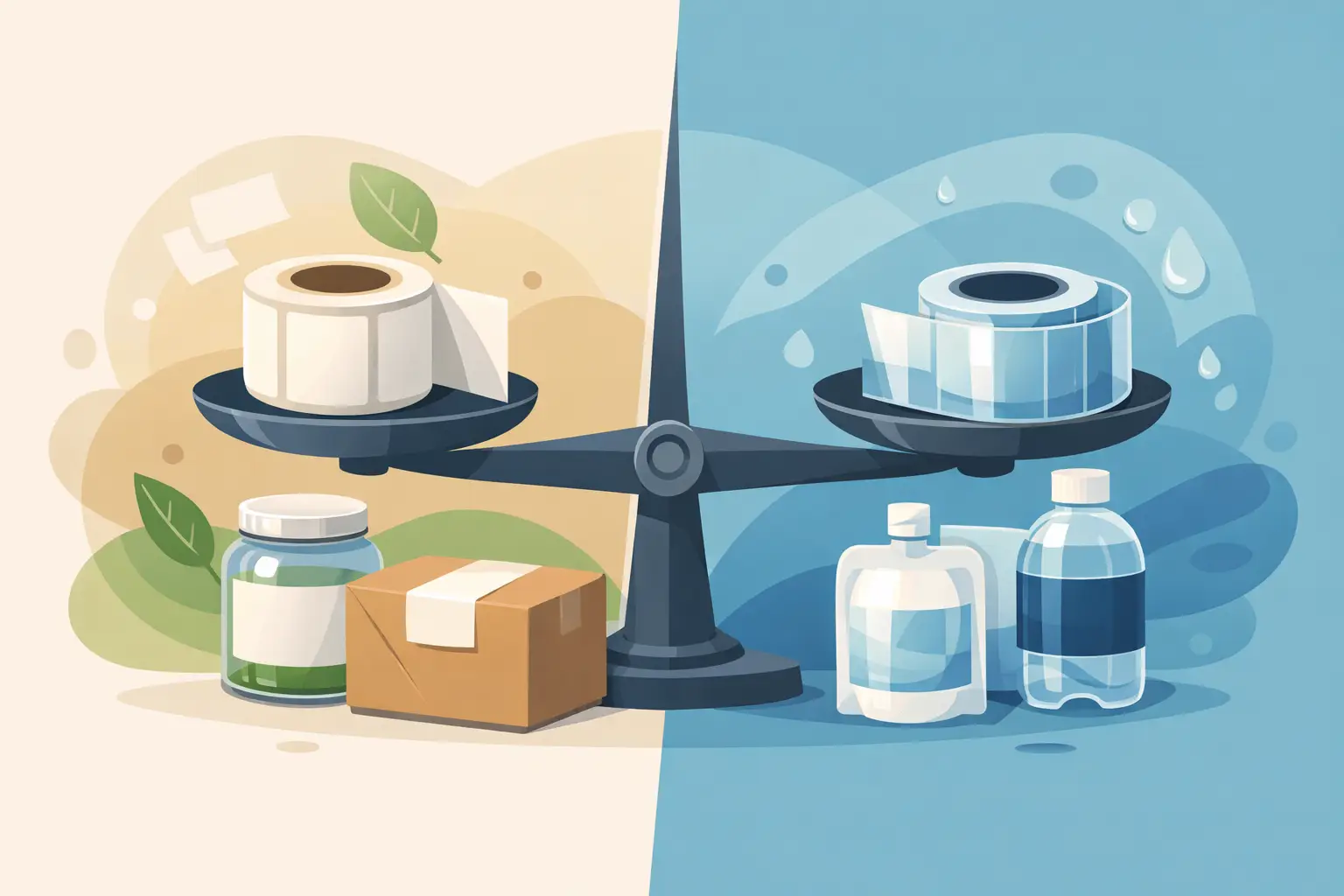
A label can look great on press and still fail once it hits a cold cooler, a wet production line, or a high-touch retail shelf. That is why the paper vs film labels decision matters early. Material choice affects appearance, durability, application performance, and cost long before the first roll goes to production.
For packaging buyers and brand teams, this is not a design-only decision. It is a production decision. The right face stock needs to match the container, the product environment, the distribution conditions, and the expectations of the end user. If any of those factors are off, even a well-printed label can wrinkle, scuff, tear, or lose shelf appeal.
Paper vs Film Labels: The Core Difference
At the simplest level, paper labels are paper-based materials designed for printability, appearance, and cost efficiency. Film labels are plastic-based materials such as BOPP, polyethylene, or polyester that are built for higher durability and resistance.
That basic distinction drives nearly every performance difference. Paper typically offers a more traditional look and a lower material cost. Film typically performs better around moisture, chemicals, abrasion, and frequent handling. Neither is automatically better. The better option is the one that fits the product’s real-world conditions.
When Paper Labels Make Sense
Paper labels are often the right fit for dry products, controlled storage environments, and brands that want a classic or textured presentation. They are widely used for food packaging, wine labels, specialty consumer goods, and products where tactile appearance matters as much as functional performance.
A major advantage of paper is visual character. Uncoated, semi-gloss, and specialty paper stocks can create a premium or natural look that some brands prefer over a more polished film surface. Paper can also be a practical choice when labels are not expected to face moisture, refrigeration, or heavy abrasion during use.
Cost is another reason buyers choose paper. If the application is straightforward and the environment is stable, paper can provide excellent print results without the added expense of a more durable film construction. For many short to mid-run consumer products, that balance works well.
That said, paper has limits. It is more vulnerable to water, oils, tearing, and scuffing. If the container sweats, the product is stored in a cooler, or the package will be handled repeatedly, paper may show wear quickly unless the construction is carefully specified.
When Film Labels Are the Better Choice
Film labels are built for tougher conditions. If your product will encounter refrigeration, condensation, squeezing, chemicals, rough shipping, or frequent contact, film is often the safer option.
BOPP is a common choice for food, beverage, health and beauty, and household products because it handles moisture well and maintains a clean appearance over time. Polyethylene works well for squeezable containers because it can conform more easily. Polyester is often selected for more demanding industrial or pharmaceutical applications where strength and resistance matter most.
The biggest advantage of film is durability. It resists tearing better than paper, holds up against water and many chemicals, and usually maintains label integrity through more aggressive use conditions. That makes it especially valuable for water bottles, refrigerated beverages, bath and body products, industrial containers, and products that move through complex supply chains.
Film also supports a strong no-label look on clear containers when paired with the right adhesive and print approach. For brands focused on modern shelf presentation, that can be a significant benefit.
The trade-off is cost and, in some cases, aesthetics. Film generally costs more than paper, and for brands looking for a warm, textured, or artisanal feel, it may not deliver the same visual effect unless the finish is carefully developed.
Appearance Matters, but So Does Use Case
Many buyers start the paper vs film labels conversation with shelf appeal. That makes sense. The label is often the first thing a customer sees. But visual preference should be tested against where the product will go and what it will endure.
A matte paper wine label may look exactly right for the brand. But if that bottle will spend time in ice buckets or refrigerated storage, the label material needs to support that environment. A glossy film label may not be the first aesthetic choice for a gourmet product, yet it could be the better performer for a package exposed to oil splatter, moisture, or repeated handling.
This is where consultation matters. Material selection should account for both appearance and performance, not one at the expense of the other. A dependable label program starts with understanding how the package behaves in the field.
Questions to Ask Before Choosing Paper or Film
The fastest way to narrow down material options is to look at a few production realities.
Start with the environment. Will the label face water, refrigeration, freezing, heat, or chemicals? If yes, film often moves to the front of the line.
Next, look at the container. Is it rigid or squeezable? Smooth or textured? Clear, colored, glass, plastic, or metal? A squeezable bottle may need a more conformable film. A rigid dry-goods jar may work well with either construction.
Then consider handling. Will the product be shipped nationally, stocked in busy retail settings, or used daily by the customer? More handling usually means more opportunities for scuffing, edge lift, or tearing.
Finally, consider brand goals and budget. If premium texture is central to the presentation and the application is dry and stable, paper may be the right fit. If long-term appearance and durability are non-negotiable, film often justifies the added material cost.
Paper vs Film Labels by Industry
Different industries tend to lean one way for practical reasons.
Food and beverage packaging often uses both. Dry packaged foods may run well with paper labels, while refrigerated beverages, condiments, and water bottles usually benefit from film. Breweries and beverage brands frequently choose film for condensation resistance, though some craft applications still favor paper for visual style.
Health and beauty products often perform better with film because bottles are handled in wet environments like bathrooms and showers. Lotion, shampoo, and body care labels need to stay attractive through repeated use.
Pharmaceutical and industrial applications usually require tighter performance standards. Durability, legibility, resistance, and reliable adhesion matter more than decorative effect. In those categories, film often provides a stronger fit, although the final construction depends on the exact use case.
Wine and specialty foods can go either way. Premium paper stocks remain popular where tradition and tactile finish matter, but film may be the better answer when moisture exposure is part of the retail or consumer experience.
Print Quality Is Not the Issue It Used to Be
Some buyers still associate film with limited print flexibility or assume paper is the only route to premium graphics. That is outdated thinking. With modern digital and conventional print capabilities, both paper and film can produce strong color, crisp detail, and high-end results when the material is matched to the application.
What matters more is how the label performs after printing. A sharp image on the wrong stock is still the wrong label. That is why experienced converters evaluate the full construction, including face stock, adhesive, finish, and application requirements.
At Miles Label Company, that production-first approach helps buyers avoid costly rework, field failures, and unnecessary upgrades. The goal is not to push one material over the other. It is to specify what will run well, look right, and hold up in use.
The Cost Question
Paper is often the lower-cost option upfront, but upfront cost does not always equal lower total cost. If a paper label fails in a refrigerated environment, scuffs during shipping, or creates problems on the application line, the savings disappear quickly.
Film typically carries a higher material price, but it can reduce risk in demanding conditions. For many buyers, the better question is not which material is cheaper. It is which material is more cost-effective for the product’s full lifecycle.
That answer depends on volume, environment, brand positioning, and operational demands. A dry retail package with limited handling may not need film. A nationally distributed beverage line probably does.
The Right Choice Depends on the Job
Paper vs film labels is not a trend question. It is a fit question. The right material depends on what the label needs to do once it leaves the press.
If your product lives in a dry, controlled setting and visual texture is a priority, paper may be the smart choice. If your package needs moisture resistance, durability, and a cleaner long-term appearance, film is often the better investment.
The best label programs are built before production starts, with the end use in mind. When the material matches the product, the label does its job quietly and consistently – exactly the way it should.