
A label can look exceptional on press and still fail in the field if its adhesive is wrong for the container, environment, or customer experience. The decision between permanent versus removable label adhesives affects more than initial application. It determines whether a label stays secure through filling, shipping, refrigeration, handling, and use – or removes cleanly when the job is done.
For product manufacturers and packaging buyers, adhesive selection should be part of the label specification from the beginning. The right face stock, print process, and finish matter, but adhesive performance is what keeps the label connected to the package.
Permanent Versus Removable Label Adhesives: The Core Difference
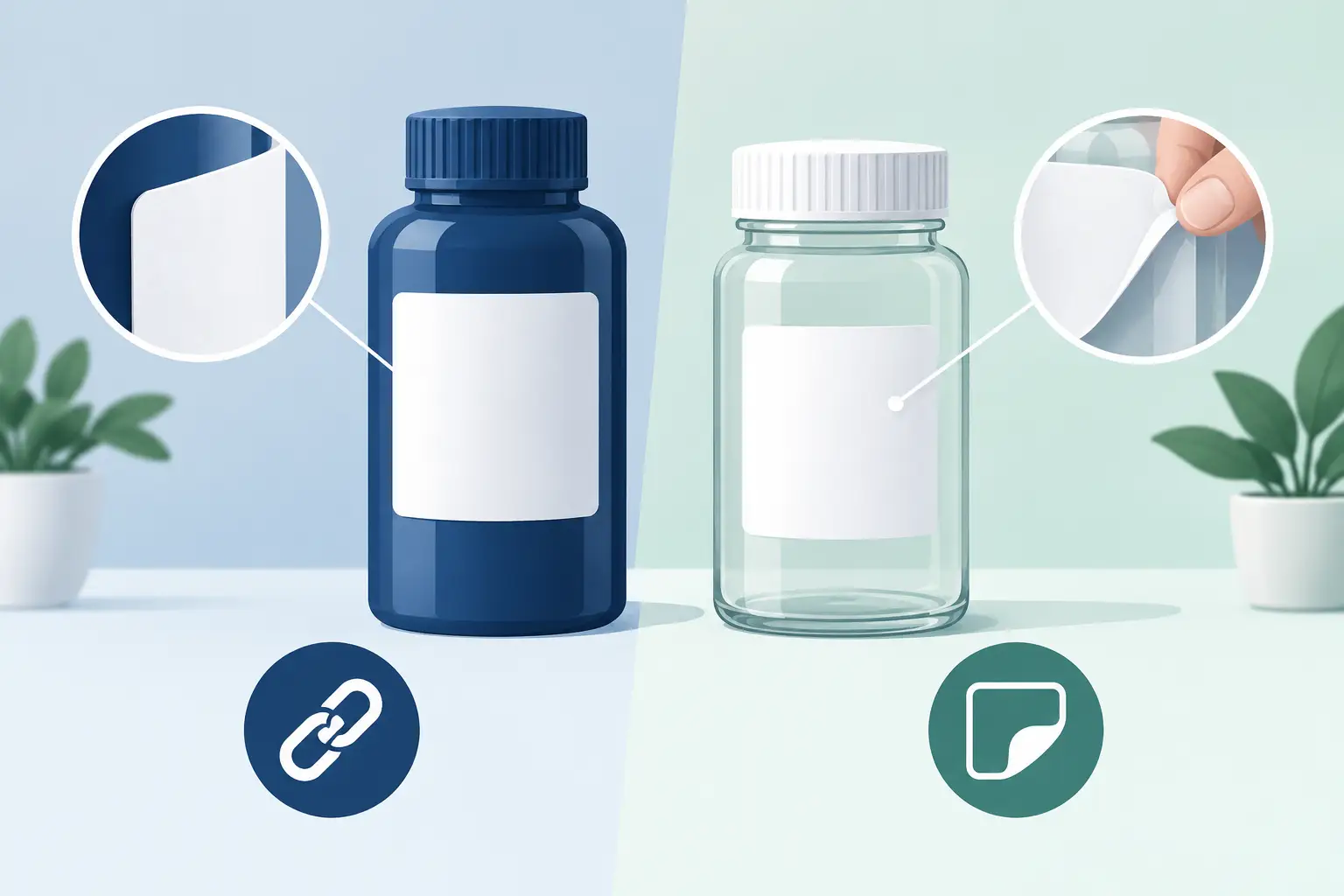
Permanent adhesive is designed to create a durable bond with the labeled surface. Once it has had time to set, removal generally requires force and may leave adhesive residue, tear the label, or damage the surface underneath. It is the standard choice for labels expected to remain on a package throughout distribution and the full product life cycle.
Removable adhesive is formulated for controlled removal. It provides enough tack to hold the label in place during normal handling, but it is intended to peel away from the surface with little or no residue. It is commonly used for temporary identification, promotions, pricing, instructions, and reusable containers.
Neither adhesive is automatically better. The right choice depends on what the label must do, how long it must remain in place, and what conditions it will encounter before and after application.
When Permanent Adhesive Is the Right Choice
Permanent adhesive is the practical choice when the label carries information that must remain associated with the product. This often includes product branding, ingredient statements, nutrition facts, warnings, directions, barcodes, lot information, and compliance language.
Food and beverage labels are common examples. A bottle label may need to withstand condensation, refrigerated storage, ice buckets, shipping abrasion, and repeated consumer handling. A permanent adhesive helps ensure the label remains secure from the production line through purchase and use.
Industrial and chemical applications frequently require permanent bonding as well. Labels on drums, tools, equipment, parts, and containers may face moisture, oils, friction, temperature changes, or outdoor exposure. In these situations, adhesive selection must work alongside the correct label material and protective finish. A permanent adhesive alone cannot compensate for a paper face stock placed in a wet, abrasive environment.
Permanent labels are also appropriate for pharmaceutical and health and beauty packaging where product identification and regulatory details need to stay legible and attached. If a label is a required part of the package, removability can create unnecessary risk.
Permanent Does Not Mean Instant
A permanent adhesive may feel secure immediately after application, but many adhesives continue to build bond strength over time. This is called dwell time. The actual performance depends on the adhesive chemistry, application pressure, container surface, temperature, and storage conditions.
For example, a permanent label applied to a curved plastic bottle may need more time to establish full contact than the same label applied to a clean glass jar. If containers are cold, wet, dusty, or oily at application, even a strong adhesive can perform poorly.
Where Removable Adhesive Makes Business Sense
Removable labels work well when the customer, retailer, distributor, or production team needs to take the label off without damaging the package. They are not weak labels. They are purpose-built labels with a different end-use requirement.
A reusable food container may need a temporary label for product identification or preparation instructions. A retail package may carry a short-term promotional sticker. A manufacturer may use removable labels for inventory control, work-in-process identification, inspection status, or kitting. In each case, clean removal is part of the value.
Removable adhesive can also support a better consumer experience. If a label is intended to be removed before use, a permanent adhesive can leave residue that frustrates customers or makes the package look less finished. This is especially relevant for gift packaging, glassware, housewares, and other reusable consumer products.
However, removable does not mean suitable for every temporary application. A label that must survive freezer storage, moisture, rough freight handling, or long-term outdoor exposure may need a specialized adhesive system. The expected removal window matters too. A label designed to remove cleanly after a few weeks may behave differently after many months of heat exposure or storage.
The Container Surface Changes the Answer
Adhesive performance starts with the substrate. Glass, corrugated cartons, coated paperboard, polyethylene, polypropylene, PET, HDPE, metal, and painted surfaces all behave differently. Some are high-energy surfaces that accept adhesives readily, while others are low-energy surfaces that are more difficult to bond.
Plastic containers deserve particular attention. HDPE and polypropylene are widely used in consumer and industrial packaging, but their low surface energy can limit adhesive contact. A label that works well on glass may lift at the edges or release too easily from these plastics unless the adhesive is selected specifically for them.
Surface texture also matters. A smooth, clean container gives the adhesive more consistent contact than a rough or irregular surface. Mold release agents, oils, dust, moisture, and condensation can interfere with adhesion. For production teams, this means the labeling environment and container condition are just as relevant as the adhesive specification.
Container shape should be reviewed early. Small diameters, sharp curves, tapered bottles, and flexible squeeze containers can put stress on labels over time. The label material, adhesive, and application method need to work together to prevent flagging, wrinkling, or edge lift.
Temperature, Moisture, and Handling Matter
There are two temperatures to consider: application temperature and service temperature. Application temperature is the condition when the label is applied. Service temperature is what the package experiences afterward. These are not always the same.
A beverage label might be applied at room temperature and later stored in refrigeration. Another product may be labeled in a cold production environment. Freezer applications, hot-fill processes, outdoor storage, and high-heat transportation each create different adhesive demands.
Moisture is equally significant. Condensation on a cold bottle can prevent proper adhesive contact at the point of application. Once the package is labeled, exposure to water, humidity, ice, or washdown conditions may challenge both the adhesive and the label construction.
Handling adds another layer. A label on a case-packed consumer product may experience friction from conveyors, packing equipment, warehouse movement, and retail shelving. A label on a hand-applied specialty product may face less abrasion but require a premium appearance. Defining the real handling conditions prevents over-specifying where it is unnecessary and under-specifying where failure would be costly.
Build the Adhesive Decision Into Your Label Brief
The most efficient label projects give the printer clear operating details before materials are selected. Rather than simply requesting a permanent or removable label, describe the package and the environment it must withstand.
Useful information includes the container material, container shape, application method, application temperature, storage temperatures, exposure to water or chemicals, expected label life, and whether the label must remove cleanly. If the product has regulatory, barcode, lot tracking, or safety requirements, those should be part of the discussion as well.
It also helps to identify what failure would look like. Is the primary concern edge lift in refrigeration? Residue on a reusable glass container? A label that must stay in place through oil exposure? A production line that needs consistent application at speed? Clear priorities make it easier to recommend a label construction that matches the job.
Test Before Full Production
When a package, adhesive, or environment is new, testing is a smart production step. Apply sample labels to actual containers and evaluate them under real conditions. Check adhesion after the expected dwell time, then review performance after refrigeration, shipping simulation, moisture exposure, or other relevant conditions.
Testing is especially valuable when changing bottle suppliers, moving to a new resin type, introducing recycled-content packaging, or switching from hand labeling to automated application. Small changes in the package can change adhesive behavior.
At Miles Label Company, the strongest label programs begin with these practical details. Our team can help evaluate the application and recommend a printed label solution built for the package, production process, and product environment.
A label should not become a point of failure after it leaves the plant. Choose permanent adhesive when the product needs a lasting connection, choose removable adhesive when clean removal is part of the experience, and make the final call based on real-world testing instead of assumptions.