
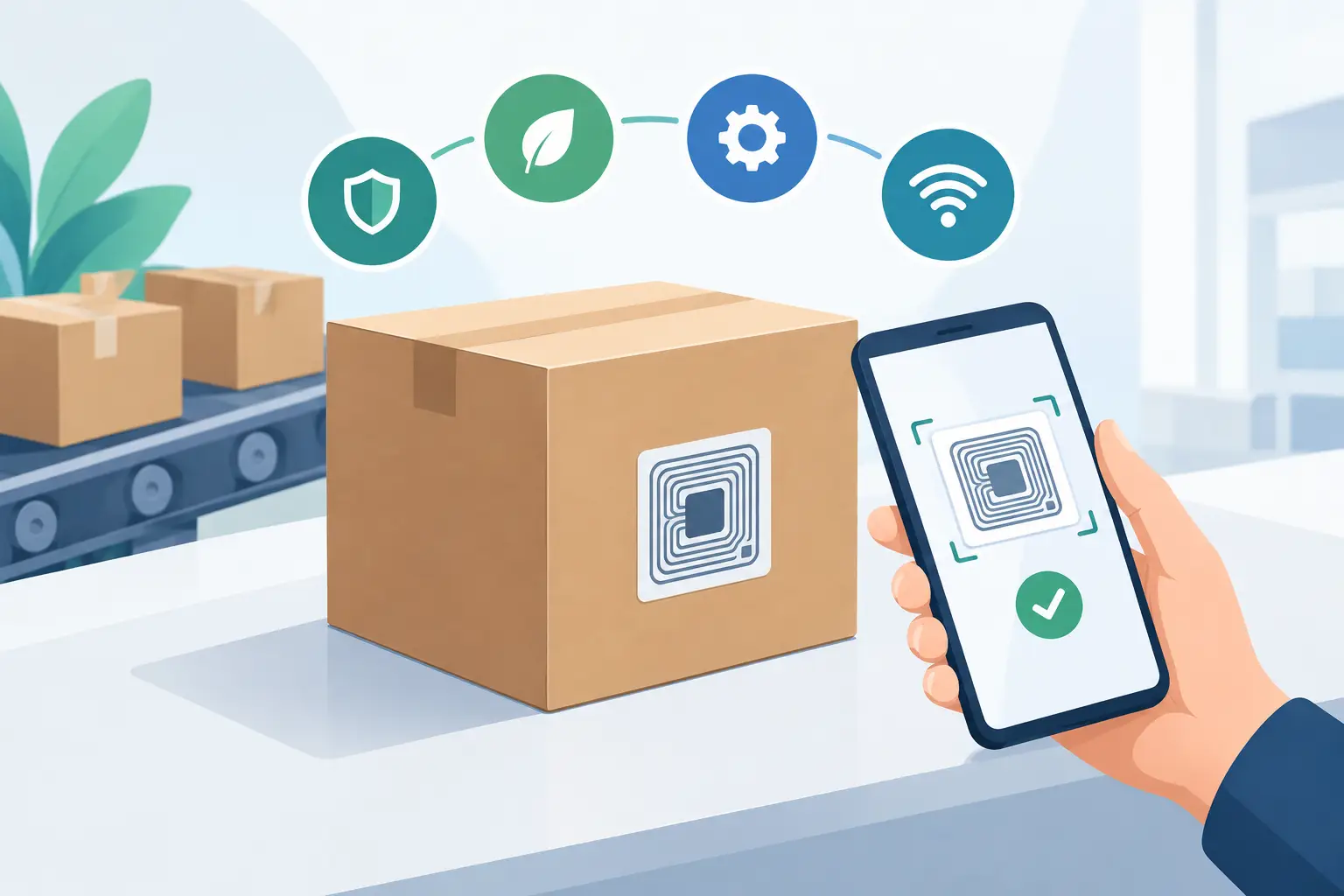
A label leaving the production line can do more than identify a product. It can confirm authenticity, support a recall, provide handling instructions, or connect a buyer to current product information. Smart label technology for packaging makes those functions possible, but the technology only delivers value when it is matched to a clear business need, the right packaging environment, and a dependable print plan.
For brands and manufacturers, the question is not whether a smart feature sounds impressive. The question is whether it improves traceability, simplifies operations, strengthens customer communication, or helps meet a specific compliance requirement. A well-planned smart label should work as reliably on the warehouse floor as it does in a customer’s hand.
What Makes a Packaging Label “Smart”?
A smart label combines printed packaging information with a technology component that can store, transmit, or direct users to additional data. The printed label remains essential. It carries required product details, branding, warnings, directions, and variable information. The smart element adds another layer of function.
That function may be as simple as a QR code directing customers to ingredient information or as specialized as an RFID inlay that supports automated inventory tracking. The right choice depends on how the package moves through the supply chain, who needs access to the information, and whether the label must perform in moisture, cold storage, abrasion, chemical exposure, or other demanding conditions.
Smart labels are not a replacement for sound label construction. Adhesive selection, facestock, coating, print quality, and application method still determine whether the label stays on the package and remains readable. A damaged code or poorly placed RFID inlay can turn a useful feature into an operational problem.
Common Smart Label Technologies for Packaging
Several technologies can be incorporated into or paired with a printed label. Each has different costs, capabilities, and production requirements.
- QR codes are printed codes scanned with a smartphone camera. They are cost-effective, widely accessible, and useful for product education, promotions, traceability pages, instructions, and digital records.
- NFC tags allow a compatible smartphone to read information by tapping the package. They can create a simple consumer interaction and may be used for authentication, premium product experiences, or digital product registration.
- RFID labels contain an inlay that can be read by a radio-frequency scanner without direct line of sight. They are often used for inventory visibility, asset tracking, fulfillment, and supply chain management.
- Serialized variable data assigns a unique code or number to each unit, batch, or production run. When tied to a database, serialization can support recall readiness, anti-counterfeiting efforts, and traceability programs.
These options are not interchangeable. A QR code is generally the practical starting point for consumer-facing communication because it requires no added electronic component. RFID is more appropriate when a business needs to read many items quickly in a warehouse, distribution center, or controlled inventory environment. NFC can be effective for higher-value products where a tap-to-connect experience fits the brand and the cost structure.
Start With the Operating Problem
The best smart-label projects begin with a specific use case. A food producer may need fast access to updated allergen details or lot-level product information. A pharmaceutical manufacturer may need serialized identification and durable labels that remain legible through distribution. A beauty brand may want to connect a customer to application instructions, refill guidance, or product education without crowding the primary package.
Supply chain needs are different from consumer marketing needs. If a warehouse team needs to improve receiving accuracy, RFID may justify the additional investment. If a brand needs a campaign landing page, a unique QR code may accomplish the goal at a much lower cost. Trying to force one technology to solve every problem often leads to unnecessary complexity.
Before selecting a format, define who will scan or read the label, where that interaction occurs, and what should happen next. Also determine whether the data needs to change after printing. A static QR code can point to a page that is updated over time. A serialized code requires disciplined data management so every printed identifier is accurate and usable.
Print Quality Still Determines Performance
Smart features need precise reproduction. QR codes must maintain adequate contrast, quiet zones, module size, and placement so they can be scanned under normal conditions. A code that appears sharp on a proof may fail after being printed too small, distorted around a curved container, covered by glare, or damaged during handling.
Variable-data work requires another level of control. Serial numbers, lot codes, and unique identifiers must print accurately, remain readable, and match the associated database records. For regulated industries, verification procedures should be built into the production process rather than treated as a final check.
Label material matters as much as image quality. Refrigerated beverages, frozen foods, outdoor industrial products, cosmetic containers exposed to oils, and pharmaceutical packaging all create different demands. A smart label should be evaluated as a complete construction: the substrate, adhesive, inks, finishing, package shape, application equipment, and expected environment.
Digital print technology can be particularly useful when a project includes multiple versions, shorter runs, or variable content. It allows brands to test designs, regionalize messaging, and produce customized data without the setup burden associated with traditional long-run printing. For recurring programs, the right production approach depends on run length, version count, finishing needs, and turnaround requirements.
Data and Compliance Require Equal Attention
A code is only as useful as the information behind it. When smart labels direct users to digital content, that content needs ownership, maintenance, and a plan for updates. A discontinued product page, expired promotion, or incorrect lot record can damage trust quickly.
For food, beverage, pharmaceutical, and industrial applications, smart label data must also support existing compliance processes. Digital information can supplement packaging copy, but it does not automatically replace required on-package statements. Brands should confirm what must remain visible on the physical label and what may be provided through a digital destination.
Privacy is another consideration. A consumer-facing scan should not collect personal data without a clear, lawful purpose and appropriate disclosure. For supply chain programs, access controls matter when codes reveal shipment, inventory, or product-security information. The technology should serve the operation without creating data practices that are difficult to manage.
Plan the Label Early, Not After Package Design Is Final
Smart features work best when they are considered during package development. Waiting until artwork is approved can create avoidable compromises, such as placing a code over a container seam, reducing it below a reliable scan size, or choosing a label format with too little space for variable information.
Bring the printer, packaging team, and technology provider into the discussion early. They can help evaluate available label real estate, material compatibility, code placement, finishing options, and production tolerances. A pilot run is often worthwhile before a large rollout, especially for RFID, serialization, or products exposed to difficult storage and handling conditions.
Miles Label Company works with brands that need more than an attractive printed label. The production conversation should include how the label will be applied, where it will travel, what information it must carry, and how quickly it needs to be produced. Those details help turn a smart-label concept into a repeatable packaging solution.
Making the Right Investment
Smart label technology for packaging should earn its place on the package. For some products, a clearly printed QR code and well-managed digital content provide the strongest return. For others, RFID or serialized variable data can improve inventory accuracy, traceability, and control across a complex supply chain.
The practical path is to begin with the problem, test the label in real conditions, and build a production process that protects both printed quality and data accuracy. A smart label is most valuable when the technology is easy for people to use and dependable enough for your operation to trust.