
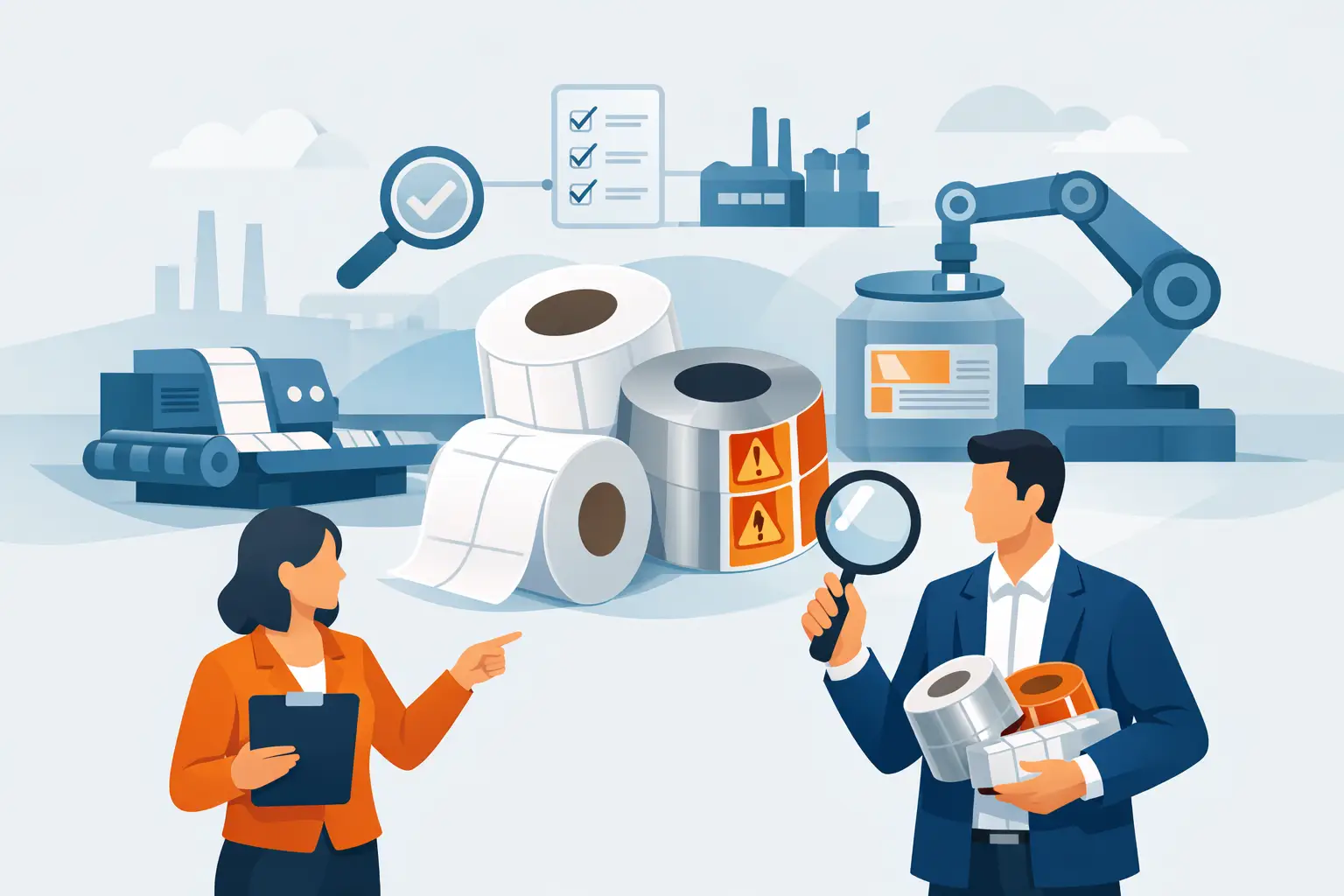
A label failure in an industrial setting rarely stays a label problem. If an identification label smears, lifts, fades, or becomes unreadable, it can slow receiving, disrupt traceability, create compliance issues, and add avoidable rework. That is why choosing the right industrial labels manufacturer matters well beyond print. It affects uptime, safety, inventory control, and the reliability of your packaged product in the field.
Industrial labels sit in tougher environments than standard retail packaging. They may be exposed to heat, cold, moisture, abrasion, chemicals, oils, outdoor storage, or repeated handling. In some cases, they also need to carry variable data, barcodes, warning information, serialized content, or application-specific instructions. A supplier that understands those conditions can help prevent problems before production starts.
What an industrial labels manufacturer should actually solve
A capable manufacturer does more than print artwork. The real job is to match face stock, adhesive, print method, finish, and production controls to the way the label will be used. That includes how long it needs to last, what surface it will be applied to, how it will be stored, and whether it must remain legible for compliance or operational tracking.
For many buyers, the challenge is not finding a company that can print a label. The challenge is finding a production partner that can ask the right questions early. A steel drum, a plastic container, a corrugated case, and a powder-coated metal panel may all require different material and adhesive decisions even if the printed design looks similar.
That is where experience matters. Industrial applications are full of small variables that affect performance. A label that works well in a temperature-controlled warehouse may fail in an outdoor yard. A construction adhesive that bonds well to one plastic may not hold to another. A barcode that scans perfectly at pack-out may become difficult to read after abrasion or condensation. These are production details, but they have business consequences.
How to evaluate an industrial labels manufacturer
The best way to evaluate a supplier is to look past the quote alone and assess whether they can support your full application. Price matters, but a lower unit cost can become expensive if labels fail in use, need to be reprinted, or cause application delays.
Material and adhesive knowledge
Start with materials. Industrial labeling often requires a combination of durability and print clarity. Paper labels may be suitable for some short-term or protected uses, but film materials are often the better choice when moisture, chemicals, abrasion, or outdoor exposure are part of the environment. Adhesive selection is equally important. Permanent, removable, freezer-grade, high-tack, and specialty adhesives all serve different functions.
A dependable manufacturer should be able to explain why one construction fits better than another. If the recommendation is vague, that is a concern. In industrial settings, material mismatch is one of the most common sources of failure.
Print quality under real-world conditions
Industrial labels still need excellent print quality. Text must remain readable. Warning panels must be clear. Barcodes and variable information must scan consistently. Colors may also matter, especially when branding and operational labeling need to coexist on the same product.
Modern digital equipment can be a major advantage here, especially for shorter runs, versioned SKUs, and faster changeovers. An advanced press platform helps maintain consistency while reducing delays tied to plates or lengthy setup. For many buyers, that means better control over inventory and fewer compromises when product information changes.
Turnaround and production reliability
Lead time is not a side issue. It is often one of the main reasons buyers change suppliers. An industrial labels manufacturer should be able to give realistic production timelines and then hit them. Fast turnaround only has value if quality stays consistent.
This is where manufacturing discipline matters. A supplier with the right equipment, scheduling practices, and repeat-order processes can support both urgent jobs and ongoing production. That becomes especially important for customers managing multiple SKUs, seasonal demand changes, or tight packaging schedules.
Compliance and data accuracy
For some industrial categories, compliance is a hard requirement, not a preference. Labels may need to support hazard communication, product identification, lot tracking, or specific content formatting. Even when the application is not highly regulated, accuracy still matters. A single error in copy, sequence, or variable data can create downstream issues in shipping, receiving, or product use.
A good manufacturer should have controls in place for proofing, approvals, and production consistency. That reduces risk and gives procurement teams and operations managers more confidence in repeat orders.
Why application details matter more than most buyers expect
One of the most common mistakes in sourcing labels is treating the printed design as the main specification. In practice, the use case usually matters more. The same label may need to perform differently based on when it is applied, the condition of the surface, and what happens after application.
For example, a label applied to a clean, dry surface in a controlled facility may perform well with one adhesive. If that same product is labeled in a colder environment or placed into storage immediately, performance can change. Likewise, textured surfaces, low-surface-energy plastics, and curved containers often require different constructions than flat cartons or smooth metal.
This is why consultative support is valuable. The best suppliers do not force every project into a standard spec. They help buyers narrow the right combination based on actual conditions. That saves time during onboarding and reduces costly trial and error.
The role of digital print in industrial label production
Digital print has changed what buyers can expect from an industrial labels manufacturer. It is no longer just about speed. It is also about flexibility, version control, and cost efficiency across a wider range of order sizes.
For brands and manufacturers with multiple SKUs, digital production can simplify versioned content, smaller runs, and mid-cycle updates. If regulations change, product details shift, or artwork needs revision, digital workflows can reduce the friction of making those updates. That is especially useful for industrial and regulated products where label content cannot stay static for long.
High-end digital equipment also supports strong image quality and color consistency. For a buyer, that means fewer compromises between technical performance and appearance. If your labels need to serve both operational and brand functions, that balance matters.
Miles Label Company, for example, combines long production experience with modern digital press capability to support projects that need reliable print quality, responsive turnaround, and cost-effective repeat manufacturing. That kind of combination tends to matter most when buyers need more than a basic print vendor.
When the lowest bid is the wrong choice
Competitive pricing matters in every sourcing decision, but labels should be evaluated on total production impact. A low quote can lose its value quickly if it leads to missed ship dates, application issues, unreadable barcodes, or inconsistent repeat runs.
That does not mean the highest-priced supplier is the best choice either. The right fit is usually a manufacturer that can explain the specification, produce consistently, and support your schedule without overengineering the job. Some applications need premium materials. Others do not. A knowledgeable supplier should be able to tell the difference and quote accordingly.
This is one of the clearest signs of a strong manufacturing partner. They are not just selling labels. They are helping you buy the right label for the job.
Questions worth asking before you place the order
Before committing to a supplier, it helps to ask a few practical questions. Have they handled similar industrial applications before? Can they recommend materials based on the actual environment? Do they have the equipment to support both current volume and future changes? How do they manage proofs, revisions, and repeat orders? What is their plan if timing becomes tight?
The answers tell you a lot about how the relationship will work once production begins. Buyers usually need more than print capacity. They need responsiveness, clear communication, and a manufacturer that understands that packaging delays affect the whole operation.
The strongest supplier relationships tend to be built on that kind of clarity. When a manufacturer understands your product, your timeline, and your performance requirements, ordering becomes easier and more predictable over time.
An industrial label may be a small component of the finished product, but it carries a large share of operational responsibility. When you choose a manufacturer with the right technical knowledge, equipment, and production discipline, you reduce risk where it counts – on the line, in the warehouse, and in the field.