
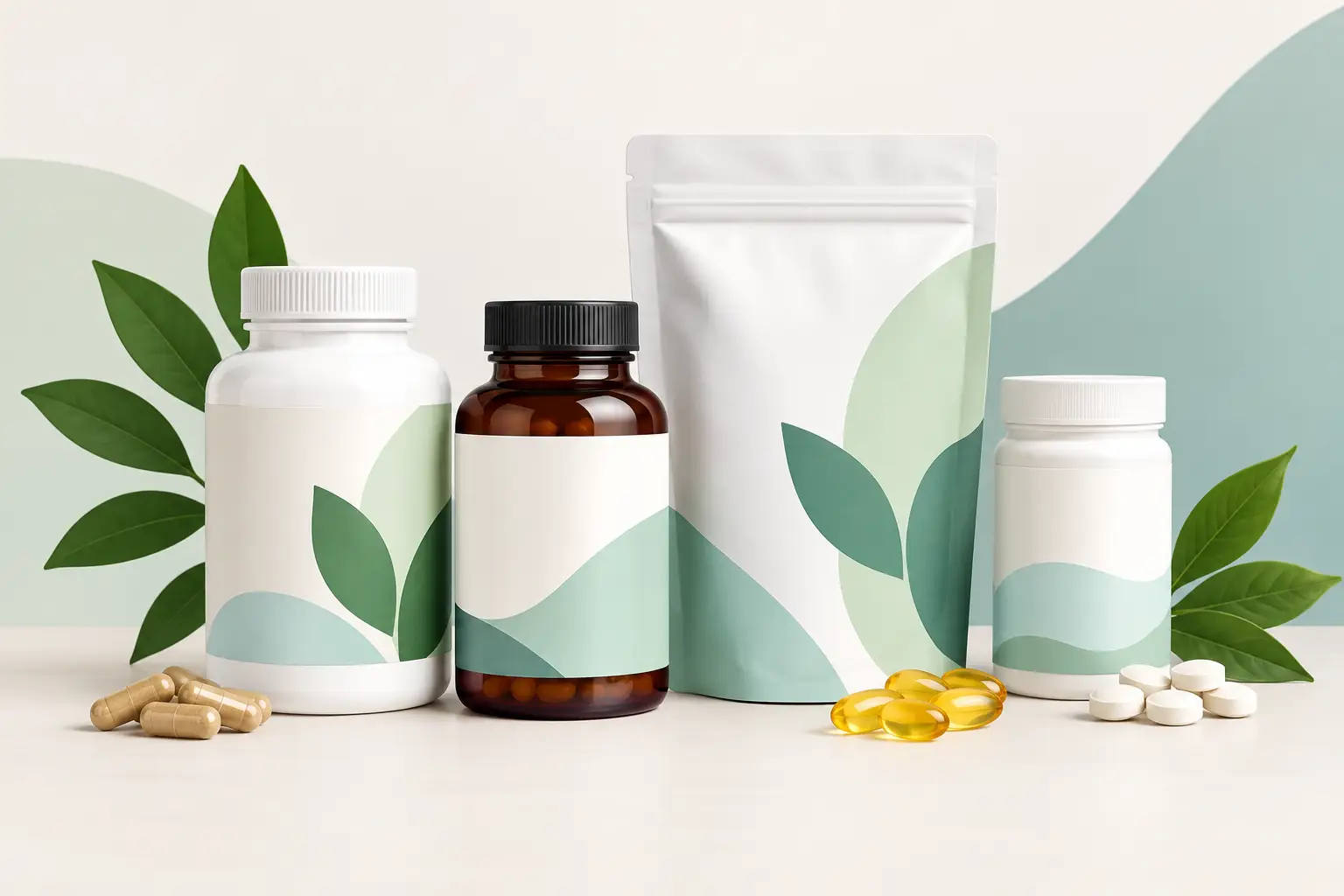
A nutraceutical label has to do more than make a supplement bottle look credible on a crowded shelf. It must remain readable through filling, shipping, handling, and everyday use while carrying detailed product information in a limited space. The right nutraceutical packaging label options balance brand presentation, package compatibility, regulatory content, and production efficiency from the beginning.
For brands selling vitamins, minerals, herbal products, protein powders, gummies, and functional wellness products, label decisions affect more than appearance. A mismatched material can lift from a refrigerated bottle. An undersized panel can force cramped Supplement Facts copy. A finish that looks premium in a proof may be impractical for a product that will be handled repeatedly in a gym bag or medicine cabinet.
Nutraceutical Packaging Label Options by Package Type
The package is the starting point for every label specification. Bottle shape, surface texture, storage conditions, application equipment, and label application speed all influence which construction will perform reliably.
Pressure-sensitive labels for bottles and jars
Pressure-sensitive labels are a common choice for nutraceutical bottles and jars because they work across many container types and support high-quality graphics. They can be produced on paper, polypropylene, polyester, and other film materials, then supplied in rolls for automated application or smaller production runs.
For standard HDPE vitamin bottles, a paper label may be a cost-effective choice when the product stays dry and is not exposed to refrigeration, oils, or heavy abrasion. Film labels are often the better fit for products that need moisture resistance, a no-label-look appearance, or added durability. White polypropylene provides a clean, opaque printed surface, while clear film can create a premium presentation when the bottle contents or container color should remain visible.
Jars introduce another consideration: panel size. Wide containers can accommodate a straightforward front-and-back label layout, while smaller bottles often benefit from a wraparound format that creates more usable copy space without reducing type size.
Shrink sleeves for full-container branding
Shrink sleeves cover most or all of a container and conform to curved or uniquely shaped packaging. They provide a large graphic canvas, which can be useful for brands with bold color systems, detailed education, or multiple required information panels.
The trade-off is planning. Sleeve artwork requires careful attention to distortion zones, seam placement, container geometry, and the shrink process. A full-body sleeve can also make it harder for consumers or recycling facilities to identify the base packaging material unless the sleeve design and removal instructions are considered early. For products where shelf impact and unusual bottle shape are central to the brand, sleeves can be a strong solution. For a conventional supplement bottle, a pressure-sensitive label may be simpler and more cost-efficient.
Flexible packaging labels for pouches
Powders, drink mixes, collagen products, and gummies are frequently packed in flexible pouches. These packages may require labels that adhere to films with low surface energy and tolerate flexing, rubbing, and changing conditions during distribution.
A pouch label needs an adhesive selected for the pouch substrate, not just the product category. Matte and gloss films can both work well, but the finish should support the brand goal and expected use. Matte finishes can create a refined, soft-touch appearance, while gloss can sharpen color and make a high-energy retail design stand out. When a pouch will be exposed to moisture or frequent handling, durable film facestocks are typically preferable to paper.
Material and Adhesive Choices Matter
A label is a construction, not just a printed image. The facestock, adhesive, liner, coatings, and finishing methods should work together with the container and the production environment.
Paper labels remain a practical option for dry, shelf-stable products with traditional branding. They offer good print quality and can be an efficient fit for many standard applications. Film labels are generally more resistant to moisture, scuffing, and tearing. Polypropylene is widely used for consumer packaging, while polyester is often selected when higher heat resistance or durability is required.
Adhesive selection is equally important. A standard permanent adhesive may be appropriate for dry bottles applied at room temperature. Products filled cold, stored in refrigeration, or exposed to condensation may need an adhesive engineered for those conditions. Containers with textured surfaces, curves, or difficult plastics can require additional testing to prevent edge lift, tunneling, or poor adhesion.
It depends on the real-world path of the product. A label that performs well in a climate-controlled warehouse may fail when applied to a cold bottle line or shipped through high heat. Providing a printer with details about filling temperature, storage conditions, package material, and application method helps prevent costly surprises.
Design for Supplement Facts and Required Information
Nutraceutical packaging often carries more mandatory content than the front panel suggests. Depending on the product and claims, the label may need room for a Supplement Facts panel, ingredient statement, allergen information, directions, warnings, other required statements, manufacturer or distributor information, lot and date coding space, and barcode placement.
This is where design discipline matters. A front label can carry the primary brand message, product name, flavor, and key differentiators. The side or back panel should give compliance content enough room to remain legible. Trying to force every benefit statement, certification mark, and marketing message onto a small bottle often creates a label that is hard to read and difficult to approve.
For products with extensive copy, an extended-content label can provide additional panels. These constructions may use a peel-back or booklet-style format to add information while preserving a clean primary presentation. They are useful when multiple languages, detailed directions, clinical references, or large warning statements must fit on a compact package.
Label printers can support accurate production, but regulatory review remains the responsibility of the brand. Have qualified regulatory and legal teams review copy, claims, panel formatting, and required statements before final production files are approved.
Print Quality and Finishes That Support the Brand
Color consistency is especially important in nutraceutical packaging. Consumers often buy the same product repeatedly, and an obvious shift in brand colors from one order to the next can weaken shelf recognition. Clear color standards, approved proofs, and a repeatable print process help maintain consistency across product lines and reorder cycles.
Digital printing is particularly useful for brands managing multiple SKUs, seasonal runs, flavor variations, or frequent artwork updates. The HP Indigo 6900 Digital Press supports high-quality color reproduction and can make shorter runs, versioned designs, and fast-turn projects more practical without treating every order like a long-run commitment.
Finishes should be selected with function in mind. Gloss varnish can increase color impact. Matte varnish can create a more understated, premium look. Spot gloss can direct attention to a logo or product name, while lamination adds a layer of protection against abrasion and moisture. The best choice is not always the most elaborate one. For a high-volume value product, a durable, cleanly printed label may deliver better results than an expensive finish that does not improve performance or shelf communication.
Build a Better Label Specification Before Quoting
An accurate quote and reliable production schedule begin with a complete label brief. The most useful details include the container dimensions and material, label size and shape, application method, expected order quantity, number of versions, storage conditions, required finishes, and the date the labels are needed.
Artwork should also identify the area reserved for variable lot codes, expiration dates, or barcodes. If codes will be printed after the labels are produced, the surface must accept the intended coding method. Allowing space for that operation avoids a common production issue: a code placed over small type, a dark background, or a textured finish that reduces readability.
Before committing to a full run, test labels on actual containers whenever the application is new, the package has a difficult shape, or the product will encounter moisture, refrigeration, oils, or high handling. A press proof confirms print appearance. An application test confirms that the label works in the environment where it will be used.
Choose a Production Partner That Plans for Reorders
Nutraceutical brands rarely stay at one SKU. A successful initial product often leads to new counts, flavors, formulas, sizes, and retail channels. A label program should make future versions easier to manage, not force the team to rebuild specifications with every reorder.
Miles Label Company works with brands and manufacturers to match materials, adhesives, print methods, and finishing options to the actual package and production requirements. That consultative approach helps teams address practical issues before labels reach the line, while modern digital capability supports quality, flexibility, and responsive turnaround.
The best label choice is the one that still looks professional and stays attached after the product has moved through production, distribution, retail, and the customer’s daily routine. Start with the package, protect the required information, and make every material decision serve the product’s real conditions.