
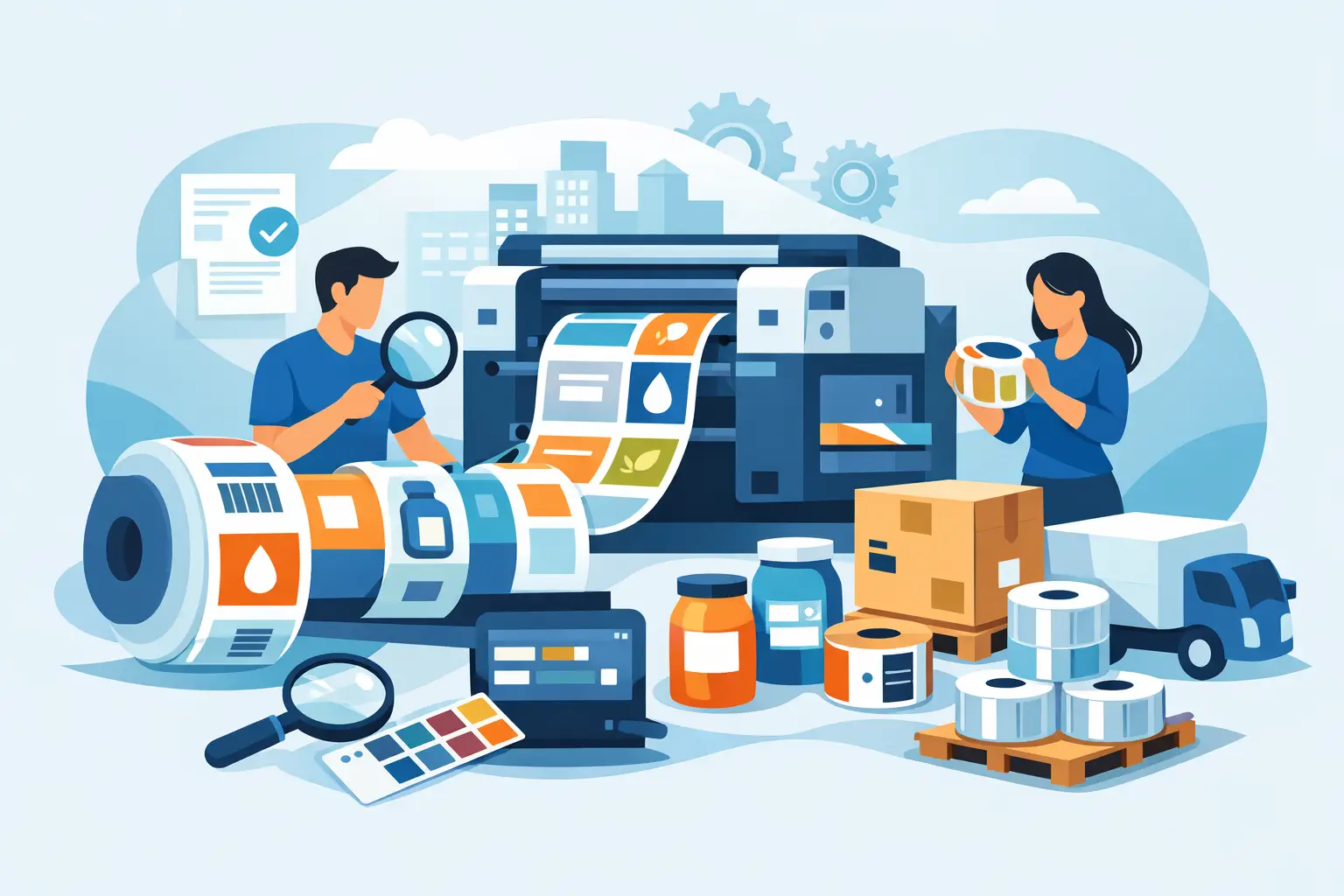
A label can look excellent on press and still fail the moment it reaches a cold cooler, a warehouse shelf, a production line, or a customer’s hands. That is why selecting among commercial label printing companies is not simply a price comparison. It is a production decision that affects brand presentation, regulatory readiness, packaging efficiency, and the ability to keep products moving.
For manufacturers and product brands, the right printing partner should do more than produce an attractive label. They should help match the label construction, print process, adhesive, finishing, and production schedule to the real conditions your product will face.
Commercial Label Printing Companies Must Start With the Application
The first question is not, “What will this label cost?” It is, “What does this label need to do?” A label for a premium wine bottle has different requirements than a pharmaceutical container, a frozen food package, a water bottle, or an industrial drum. Appearance matters in every category, but the environment and handling requirements determine whether a label performs after it leaves the printer.
A capable commercial label printer will ask detailed questions early: What is the container material? Will the product be refrigerated, frozen, exposed to moisture, or used outdoors? Does the label need variable information such as lot numbers, barcodes, or batch data? Is there a regulatory copy requirement? Will the label be applied by hand or on an automated line?
These details influence material selection. Paper labels can offer a classic, tactile appearance for certain food, wine, and specialty products. Film materials may be a better choice when moisture resistance, flexibility, or durability is required. Adhesives also need to fit the application. A label that adheres well to glass may not behave the same way on textured plastic, curved containers, or surfaces exposed to condensation.
A printer that moves directly to a quote without understanding the application may offer a low initial price, but the risk appears later as lifting edges, wrinkling, poor adhesion, or rejected packaging runs.
Print Quality Is More Than a Good-Looking Proof
Brand owners often judge print quality by color, detail, and finish. Those are essential, particularly for consumer packaged goods where the label carries the brand at the point of sale. However, production quality also includes consistency from one run to the next.
A dependable printer should be able to reproduce fine type, clean barcodes, sharp imagery, and accurate brand colors across repeat orders. For a growing brand, that consistency matters when products are manufactured at different times, shipped to different locations, or displayed side by side with earlier inventory.
Digital printing has changed what is possible for many label programs. Modern equipment, including the HP Indigo 6900 Digital Press, can support high-quality color reproduction, short runs, versioned artwork, and faster production without the setup requirements associated with many traditional processes. This can be particularly valuable for seasonal products, limited releases, regional packaging, and brands that need multiple SKUs without carrying excessive inventory.
Still, digital is not automatically the best answer for every project. Very large, stable-volume programs may benefit from a different production approach. The right commercial label printing company will recommend the process that fits your quantity, artwork complexity, timeline, and cost target rather than treating every order the same.
Color Management Protects Brand Recognition
A logo is not just a design file. It is a recognizable business asset. Small shifts in a signature color can be noticeable when labels appear on a retail shelf or are compared against other packaging materials.
Ask how the printer manages color expectations, especially when your label uses brand-critical hues, metallic effects, gradients, or photography. A press proof or approved production standard can help establish a clear target before a larger run begins. This is especially helpful when packaging components are sourced from multiple suppliers and need to work together visually.
Materials, Adhesives, and Finishes Should Fit the Product
The label face stock is only one part of the construction. The liner, adhesive, coating, and finishing options all contribute to performance and shelf impact. A production-focused partner will help you balance those choices against your actual needs instead of adding unnecessary cost.
For example, a health and beauty product may need a label that maintains a polished appearance in humid bathrooms and resists oils or frequent handling. A beverage label may need to tolerate refrigeration and condensation. Produce stickers require dependable adhesion and materials appropriate for direct food-contact considerations. Industrial labels may need resistance to chemicals, abrasion, heat, or outdoor exposure.
Finishes can also serve practical and branding purposes. Gloss can create vivid color and a polished retail look, while matte can support a more understated premium presentation. Spot effects, textured stocks, and specialty embellishments can help a package stand out, but they should be selected with the product’s use, budget, and application method in mind.
The best choice depends on the product. A label that is ideal for a luxury cosmetic carton may be impractical for a high-speed food packaging line. Good recommendations account for both visual goals and operational reality.
Compliance Requires Careful Production Planning
Regulated and information-heavy labels leave little room for error. Pharmaceutical, food, nutritional, chemical, and industrial products may require precise ingredient statements, warnings, directions, lot information, barcodes, or other mandated content. A labeling issue can delay a product launch, create costly rework, or introduce risk into the supply chain.
The printer is not a substitute for legal or regulatory review, but an experienced production partner understands the importance of clear artwork, readable type, dependable barcode printing, and controlled repeat production. They can also identify print-related concerns before a job reaches the press, such as type that is too small for the selected process or artwork elements that may not reproduce cleanly.
Version control is another practical concern. When formulas, serving information, languages, or product claims change, old labels must not remain in circulation by mistake. Work with a printer that has organized approval procedures and can clearly distinguish current files from superseded versions.
Turnaround Time Depends on More Than Press Speed
Fast turnaround is valuable, but it should not mean skipped checks or rushed material decisions. The actual timeline includes artwork readiness, prepress review, material availability, proof approval, production scheduling, finishing, inspection, and shipping.
The most reliable way to protect a deadline is to involve your printer early. Share expected launch dates, forecasted quantities, application details, and any upcoming promotional or seasonal needs. This gives the production team time to identify potential constraints before they become emergencies.
For repeat programs, planning ahead can also reduce cost and risk. Brands may benefit from setting reorder points, reviewing inventory patterns, and grouping related SKUs where appropriate. A responsive printer can help create a production plan that supports both immediate needs and future growth.
Ask How the Printer Handles Changes
Packaging changes are common. A customer may need a new flavor added to a product line, revised nutrition information, a retailer-specific UPC, or a shorter run for a market test. The question is not whether changes will happen. It is whether your printing partner can handle them without creating confusion or long delays.
Look for clear communication, practical quoting, and a team that can explain trade-offs. Sometimes a small quantity is the right business choice even if the per-label cost is higher. Sometimes consolidating versions or adjusting a material can improve efficiency. You need a supplier willing to discuss those decisions directly.
What a Productive Label Printing Partnership Looks Like
The strongest supplier relationships are built on accurate information and consistent follow-through. Your printer should understand your label specifications, approval process, quality expectations, and delivery requirements. In return, your team should provide complete artwork, realistic timelines, and early notice of changes whenever possible.
Miles Label Company works with businesses across food and beverage, health and beauty, industrial, pharmaceutical, water bottle, beer and wine, and produce label applications. That range matters because it brings practical experience to projects that may combine shelf appeal, specialized materials, and demanding production requirements.
Before choosing a printer, evaluate how they respond to your questions. Do they ask about the container and application environment? Can they explain material options in plain terms? Do they provide realistic turnaround expectations? Are they prepared to support repeat orders as your product line expands?
A label is one of the last components applied before a product reaches the market, but it should be considered much earlier. Bring your label printer into the planning process while there is still time to make good material, design, and production decisions. That early conversation can prevent expensive changes later and help your finished package do its job from the first unit to the next reorder.